2026 Advertising Script Examples: 7 Powerful Templates
Discover 7 powerful advertising script example templates for social, real estate, and more. Get actionable breakdowns to create high-converting video ads.
Crafting a compelling video ad can feel daunting. The right words, timing, and structure often mean the difference between an ad that gets skipped and one that drives conversions. A well-written script is the foundation of any successful video, guiding every visual, sound, and message to create a powerful impact in just a few seconds.
To demystify this process, we've compiled a comprehensive guide breaking down seven essential advertising script example templates. Each example is designed for a specific marketing goal, from stopping the scroll on social media to showcasing a product's full potential. Before diving into these templates, it's crucial to grasp the core principles of narrative structure. To truly master the perfect script, understand the fundamental principles behind crafting one by exploring resources on how to write a compelling video script.
In this article, we'll provide a detailed analysis of each script's hook, messaging, timing, and production notes, focusing on actionable strategies you can replicate. You will learn not just what to say, but how and when to say it for maximum effect. This collection of examples will serve as your blueprint for creating high-performing video ads consistently.
1. 30-Second Social Media Video Ad Script
The 30-second social media ad is a cornerstone of modern digital marketing, engineered for platforms where attention is the most valuable and scarce resource. Its power lies in a rigid, hook-driven structure designed to stop the scroll, present a problem, offer a solution, and drive action all within a half-minute. This format is not just a condensed TV commercial; it’s a unique storytelling medium optimized for silent viewing, vertical formats, and rapid user engagement.
This type of advertising script example typically follows a precise formula: an immediate visual hook (0-3 seconds), a relatable problem statement (3-10 seconds), a compelling solution showcase (10-25 seconds), and a clear call-to-action (25-30 seconds). The script prioritizes visual storytelling over complex dialogue, making it perfect for e-commerce product launches, real estate showcases, or dramatic before-and-after transformations.
Strategic Breakdown
- Hook (0-3s): Lead with your most visually arresting content. For an interior design service, this is the stunning "after" shot, not the messy "before." The goal is to immediately disrupt the user's scrolling pattern.
- Problem/Solution (3-25s): Quickly transition to the user's pain point and introduce your product as the clear solution. Use quick cuts, dynamic text overlays, and upbeat music to maintain momentum.
- Call-to-Action (25-30s): End with a direct, unambiguous instruction. Use on-screen text like "Shop Now" or "Book a Tour" combined with a verbal cue to maximize impact, especially for users watching with sound on.
Actionable Takeaways
To effectively implement this script, focus on conciseness and visual clarity. Utilize AI tools like Proom AI, which has templates pre-formatted for these 30-second constraints, allowing you to generate scripts from product images. Always include text overlays highlighting key benefits, as a significant portion of social media video is consumed without sound. Finally, A/B test different hooks relentlessly; a change in the first three seconds can dramatically alter campaign performance.
2. Product Transformation Before-and-After Script
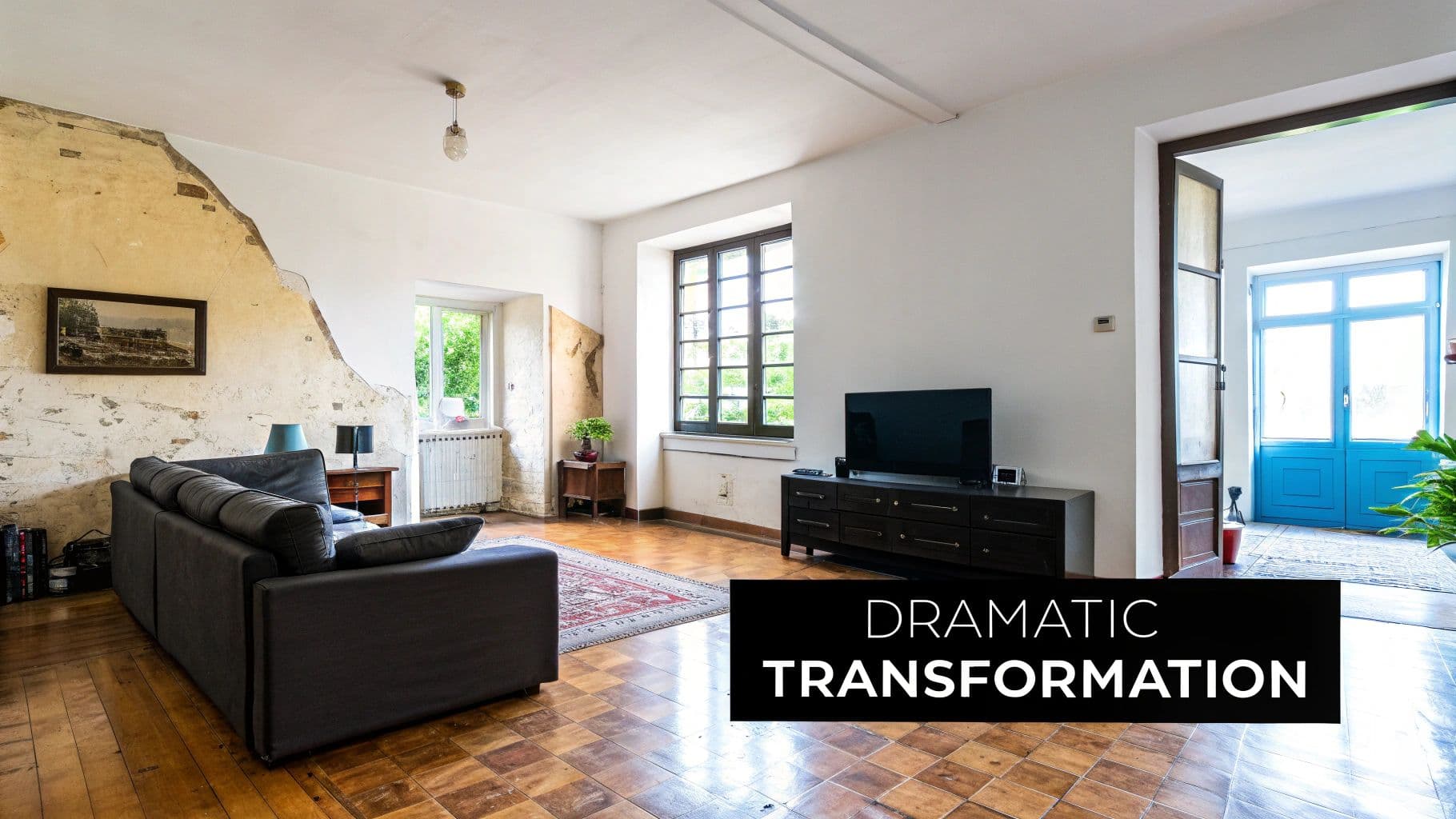
The before-and-after script is a powerful narrative device that visually proves value by showcasing dramatic change. This format taps into a fundamental human desire for improvement and resolution, making it incredibly effective for industries like real estate, beauty, and home services. It works by establishing a relatable "before" state, full of imperfections, and contrasting it with a stunning "after" state, achieved through the product or service.
This type of advertising script example builds a compelling story of transformation. The script guides the viewer from a point of dissatisfaction to a state of aspiration, making the product the hero of the narrative. It's less about telling and more about showing, using visual evidence as the primary persuasive tool. For instance, platforms like Proom AI offer industry-tailored templates that automatically generate cinematic transitions between before-and-after imagery to maximize this visual impact.
Strategic Breakdown
- Establish the "Before" (0-5s): Start by clearly showing the initial problem. For a skincare product, this is the blemish; for a renovation, it's the dated room. Use this moment to create empathy and relatability with the viewer's own pain points.
- Introduce the Process (5-20s): Briefly show the product or service in action. This is the "how" of the transformation. Use quick cuts, time-lapses, or dynamic text overlays to explain the steps without slowing the pace.
- The "After" Reveal (20-30s): This is the climax. Unveil the final result with dramatic flair. Use slow-motion, impactful music, and high-quality visuals to emphasize the magnitude of the change and create a "wow" moment that prompts the final call-to-action.
Actionable Takeaways
To create a successful before-and-after script, maintain consistent camera angles and lighting between your before and after shots to make the transformation clear and believable. Use AI voiceovers to narrate the journey, adding a professional layer of storytelling that explains the value delivered. Finally, enhance the emotional arc with a music track that builds from something neutral or slightly somber to an uplifting, triumphant crescendo during the reveal.
3. AI Influencer Testimonial Script
The AI influencer testimonial script is a cutting-edge format that merges the authenticity of influencer marketing with the scalability and control of AI. Instead of relying on human creators, brands use AI-generated avatars to deliver personal, conversational endorsements. This approach allows for unparalleled brand consistency, rapid content creation, and A/B testing of different personas, scripts, and languages without the logistical hurdles of traditional influencer collaborations.
This type of advertising script example is crafted to feel like a genuine user review while being fully controllable. It’s perfect for SaaS feature walkthroughs, e-commerce product demonstrations, or any scenario where a relatable "human" touch is needed to explain complex information or build trust. The script focuses on conversational language, addressing specific customer pain points and objections directly, making the AI presenter a credible and persuasive brand advocate.
Strategic Breakdown
- Credibility Hook (0-5s): Start with a direct and relatable statement to establish the AI presenter's authority and authenticity. For a SaaS product, this could be, "I've tried five different project management tools, and this is the only one that actually saved me time."
- Problem-Agitate-Solve (5-20s): The AI influencer clearly defines a common problem, explains why it's frustrating, and then presents the product as the definitive solution. Use screen recordings or close-ups of the product in action to visually support the testimonial.
- Benefit-Driven CTA (20-30s): The call-to-action should feel like a genuine recommendation, not a hard sell. The AI presenter can say, "Don't just take my word for it, try the free demo for yourself and see the difference."
Actionable Takeaways
To execute this script effectively, focus on humanizing the AI's delivery. Use contractions, pauses, and a conversational tone to avoid a robotic feel. Leverage platforms like Proom AI to create a custom AI influencer that perfectly aligns with your brand's aesthetic and target audience demographics. To make endorsements more compelling, study powerful examples of testimonial ads to understand what makes a user story resonate. Finally, script multiple variations addressing different customer segments or objections and use AI to deploy them for targeted A/B testing at scale.
4. Email Marketing Video Thumbnail Script
The email marketing video thumbnail script is a highly specialized, ultra-short-form ad (5-15 seconds) designed to boost engagement within email campaigns. Its primary goal is not just to be watched, but to create a compelling, clickable preview that entices subscribers to click through from their inbox. This format prioritizes the first frame as a powerful static image, ensuring the message lands even if the video fails to load or auto-play.
This type of advertising script example is less about a narrative arc and more about a single, potent visual message. The script focuses on a rapid reveal, a simple benefit, or a dynamic movement that culminates in a perfect thumbnail image. This makes it ideal for e-commerce flash sales, exclusive VIP offers, or real estate open house announcements, where a single, striking visual can significantly outperform a static image in a crowded inbox.
Strategic Breakdown
- Compelling First Frame (0-1s): The script’s first instruction is to design the absolute best possible static thumbnail. This frame must communicate the core offer with high-contrast text and a clear subject, as it may be the only thing a recipient sees.
- Dynamic Hook (1-10s): Introduce a simple, eye-catching motion. This could be a product rotating, a "Sold Out" stamp appearing, or a discount percentage animating onto the screen. The movement’s purpose is to signal that the content is a video, encouraging a click.
- Clear Call-to-Action (10-15s): The video concludes with the same strong visual from the beginning, reinforcing the CTA. The text overlay should be benefit-driven, such as "Unlock Your Offer" or "See New Arrivals."
Ready to create video ads?
Turn your photos into scroll-stopping ads in minutes. No video editing skills required.
Try For FreeActionable Takeaways
To master this script, focus on simplicity and mobile readability. Use bold, minimal text overlays that are easily legible on small screens. Leverage AI tools like Proom AI to generate multiple video thumbnails from a single product image, allowing for robust A/B testing of different text overlays or animations to see which drives the highest click-through rate. Always ensure the video file size is optimized for fast email loading to avoid deliverability issues and test your email across major clients like Gmail and Apple Mail for compatibility.
5. Real Estate Property Walkthrough Script
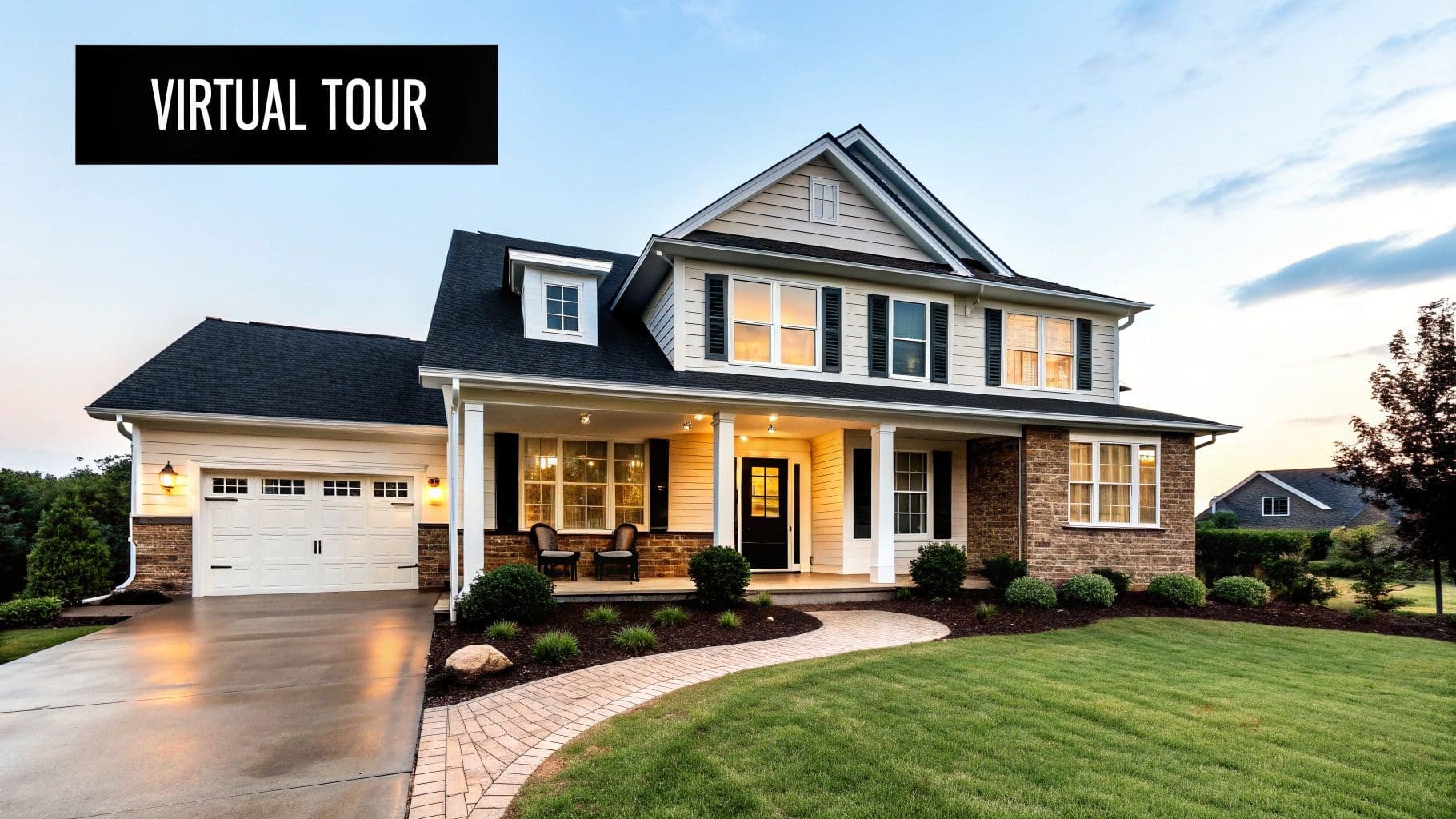
The real estate property walkthrough script transforms a static listing into an immersive virtual tour, guiding potential buyers through a home's narrative from the curb to the backyard. This format is essential in a digital-first market, allowing agents to create an emotional connection and showcase a property's unique character and flow beyond what still photos can capture. It is a storytelling tool designed to help viewers envision themselves living in the space, making it a powerful asset for converting online interest into in-person showings.
This type of advertising script example follows a logical, room-by-room progression that builds excitement and highlights key selling points. The script blends descriptive narration with visual cues, focusing on lifestyle benefits, high-value features, and the overall ambiance of the home. Its effectiveness comes from creating a cinematic and welcoming experience, turning a simple property viewing into a compelling journey that answers buyers' questions before they even ask them.
Strategic Breakdown
- Exterior & Entry (0-15s): Start with an establishing shot of the exterior and entryway. The narration should be warm and inviting, setting the stage and highlighting curb appeal, the neighborhood, and the home's architectural style.
- Main Living Areas & Kitchen (15-45s): Move methodically through the heart of the home, focusing on flow and functionality. Use the script to point out unique features like a renovated kitchen, high ceilings, or custom built-ins. Overlay text with key specifications like square footage.
- Bedrooms, Baths & Unique Spaces (45-75s): Guide viewers through private spaces, emphasizing comfort and quality. Highlight ensuite bathrooms, walk-in closets, or bonus rooms. This is where you showcase details that add significant value.
- Outdoor & Closing CTA (75-90s): Conclude the tour in the outdoor living space, painting a picture of the lifestyle it offers. End with a strong call-to-action that provides clear next steps, like "Schedule your private tour today" or "Visit the full listing online."
Actionable Takeaways
To execute this script effectively, prioritize a smooth, cinematic flow. Utilize tools like Proom AI, which offers specialized real estate templates that convert property photos into dynamic video walkthroughs with professional pacing and transitions. Enhance the narrative with on-screen text overlays for key details (beds, baths, square feet) and close-up shots of high-quality fixtures and finishes. Always conclude by mentioning neighborhood amenities to sell the complete lifestyle, not just the house. For a deeper dive into this strategy, you can find more insights on video marketing for real estate agents.
6. Product Feature Highlight Carousel Script
The Product Feature Highlight Carousel is a structured video format designed to break down a complex product into digestible, benefit-driven segments. Instead of overwhelming the viewer with a single, monolithic explanation, this script dedicates focused screen time to 3-5 key features, presenting them sequentially. This method is exceptionally effective for products with multiple value propositions, like SaaS platforms, multi-functional kitchen gadgets, or sophisticated skincare formulas.
This type of advertising script example is built for clarity and retention, guiding the viewer through a logical progression of benefits. Each segment typically introduces a problem or need, presents a specific feature as the solution, and then seamlessly transitions to the next. The carousel format excels on platforms where users are in a consideration or research mindset, allowing brands to build a comprehensive case for their product's superiority without losing engagement.
Strategic Breakdown
- Hook & Primary Benefit (0-5s): Open with a holistic statement about the product's ultimate benefit. For a smart home system, this could be "Total home control from one app." This sets the stage before you dive into individual features.
- Feature Carousel (5-25s): Dedicate 5-7 seconds to each key feature. Frame each one as a mini-story: State a common pain point ("Hate leaving lights on?") and immediately show the feature solving it (one-tap control). Use clear text overlays and distinct visuals for each segment.
- Comprehensive CTA (25-30s): Conclude by summarizing the collective value. Instead of just "Buy Now," try "See All Features & Get Started," directing users to a landing page where they can explore the details you've just highlighted.
Actionable Takeaways
To execute this script effectively, prioritize a logical flow, ordering features from most to least critical or in the sequence a user would discover them. Use consistent visual transitions and text animations to create a cohesive, professional feel between segments. With a tool like Proom AI, you can upload distinct images for each feature and apply a uniform style template, ensuring this consistency is automated. Critically, keep the script for each individual segment extremely tight; focus on the single biggest benefit of that feature before moving on. This prevents cognitive overload and makes the product feel both powerful and easy to understand.
7. Call-to-Action (CTA) Hook Script with Urgency
The CTA hook script is a high-octane format engineered for one purpose: immediate action. It flips the traditional script model by leading with the call-to-action wrapped in a layer of urgency, scarcity, or exclusivity. This approach is built on the psychological principle of FOMO (Fear of Missing Out), creating a compelling reason for viewers to stop scrolling and act now, not later. It bypasses lengthy exposition to get straight to the offer, making it ideal for flash sales, limited-time promotions, or exclusive product drops.
This type of advertising script example is less about telling a story and more about creating an event. The structure is direct and potent: an urgent hook stating the offer and limitation (0-3 seconds), a quick showcase of the product or value (3-10 seconds), a reiteration of the urgency and deadline (10-13 seconds), and a final, clear call-to-action (13-15 seconds). It thrives in fast-paced environments where capturing attention and converting it instantly is paramount.
Strategic Breakdown
- Urgent Hook (0-3s): Lead with the most critical information. Start with on-screen text like "FINAL 24 HOURS" or "ONLY 50 LEFT." The goal is to immediately qualify viewers who are interested in the offer and create an instant sense of scarcity.
- Value Showcase (3-10s): Briefly show the product or service being offered. Use quick, dynamic shots that highlight its most desirable features. The visuals must quickly justify the urgency you've just created.
- Reiterate & Instruct (10-15s): End by reinforcing the deadline and providing a simple, direct command. Combine a verbal cue like, "Don't miss out," with an on-screen button that says "Shop Now" or "Get Access."
Actionable Takeaways
To execute this script effectively, specificity is key. Instead of "limited time," use "ends at midnight." AI tools are invaluable here; for instance, Proom AI's tools can generate dozens of compelling CTA hooks for A/B testing, helping you find the most potent combination of words. To learn more about crafting these powerful prompts, explore tools like this CTA generator from proom.ai. Always pair your urgency with a genuinely valuable offer to maintain brand trust and avoid message fatigue. Finally, incorporate visual cues like countdown timers or depleting inventory bars to amplify the psychological pressure to act.
7 Advertising Script Examples Comparison
| Title | Implementation complexity | Resource requirements | Expected outcomes | Ideal use cases | Key advantages |
|---|---|---|---|---|---|
| 30-Second Social Media Video Ad Script | Low–Moderate — tight timing and platform specs | Strong hero visuals, short clips, platform aspect ratios, AI captions | High engagement and quick conversions; strong brand recall | Social platform ads, e‑commerce launches, fashion/beauty reels | High engagement; fast production; mobile‑first; multilingual voiceovers |
| Product Transformation Before-and-After Script | Moderate — needs careful sequencing and reveal timing | High‑quality before/after assets, color grading, music, testimonial clips | Persuasive emotional impact; clear ROI demonstration; portfolio asset | Real estate renovations, interior design, beauty, home improvement | Highly persuasive; strong visual storytelling; portfolio builder |
| AI Influencer Testimonial Script | Moderate — avatar creation and voice tuning; compliance checks | AI avatar setup, branded assets, script localization, voice models | Consistent scalable messaging; cost savings vs. talent; multilingual reach | E‑commerce demos, SaaS walkthroughs, scalable ambassador campaigns | Scalable and repeatable; brand control; lower talent costs; always available |
| Email Marketing Video Thumbnail Script | Low — very short and thumbnail‑first design | High‑contrast thumbnail image, small optimized video file, clear CTA | Higher email CTRs and opens; incremental conversions from campaigns | Email flash sales, launch announcements, seasonal promotions | Increases email engagement; quick production; reusable across campaigns |
| Real Estate Property Walkthrough Script | Moderate–High — comprehensive room flow and detail capture | Quality property photos/videos, neighborhood assets, overlay specs | Increased listing views and inquiries; better remote qualification | Virtual tours, MLS listings, agent marketing, luxury showcases | Improves listings; pre‑qualifies buyers; professional presentation without videographer |
| Product Feature Highlight Carousel Script | Moderate — modular pacing and segment transitions | Multiple feature assets, consistent styling, longer runtime (45–90s) | Clear product understanding; informed purchase decisions for complex products | SaaS feature overviews, multi‑function products, B2B product pages | Accommodates complexity; modular and editable; structured pacing |
| Call-to-Action (CTA) Hook Script with Urgency | Low–Moderate — strong hook writing and precise timing | Compelling hook creative, urgency visuals (timers, stock), accurate offer info | High conversion rates for time‑sensitive promotions; immediate actions | Flash sales, product launches, limited inventory promotions | Drives immediate conversions; easy to A/B test; measurable performance |
Turn Your Scripts into High-Impact Video Ads Instantly
We've explored a diverse range of advertising script examples, from quick 15-second hooks to detailed testimonial formats. Each script, whether for a product transformation or a real estate walkthrough, serves as a powerful blueprint. The common thread connecting all these successful examples is a deep understanding of structure: a compelling hook, a clear value proposition, and an unmissable call to action.
Mastering these structures is the first critical step. The true power, however, is unleashed when you recognize that a great script is not just words on a page but a strategic plan for visual storytelling. The most effective ads seamlessly merge persuasive copy with captivating visuals, creating an experience that resonates with the audience long after they've scrolled past.
From Blueprint to Brilliant: Your Actionable Next Steps
The journey from a written concept to a high-converting video ad can seem daunting, but it doesn't have to be. The examples in this article demonstrate that you don't need a Hollywood budget, just a smart strategy. By focusing on replicable frameworks, you can consistently produce content that captures attention and drives results.
Here are the key takeaways to put into practice immediately:
- Adapt, Don't Just Copy: Use each advertising script example as a flexible template. Inject your unique brand voice, product benefits, and customer pain points to make it your own.
- Prioritize the First Three Seconds: As seen in the CTA Hook Script, the initial moments are make-or-break. Always front-load your most compelling visual and messaging hook to stop the scroll.
- Message and Visuals Must Align: A script that promises a transformation needs to be paired with powerful before-and-after visuals. A script highlighting a feature needs to show that feature in clear, concise action. This synergy is non-negotiable.
- Clarity Over Complexity: Your goal is to communicate value quickly and efficiently. Avoid jargon and focus on a single, core message that your audience can grasp in seconds.
Ultimately, the ability to rapidly test and deploy different scripts is what separates good marketers from great ones. The faster you can move from an idea to a live ad, the faster you can learn what resonates with your audience and optimize your campaigns for maximum impact. This is where modern tools become a game-changer, removing the traditional barriers of time, cost, and technical expertise. You now have the frameworks; the next step is to bring them to life with speed and precision.
Ready to turn your best ideas into professional video ads? Proom AI allows you to transform static images into dynamic, engaging videos in just a few clicks. Use our AI-powered tools to bring your advertising script example to life and start creating high-impact campaigns today. Visit Proom AI to see how simple it can be.
Ready to create video ads?
Turn your photos into scroll-stopping ads in minutes. No video editing skills required.
Try For Free