2026 Ad Script Examples: 9 High-Converting Templates
Discover 9 powerful ad scripts examples for social media, YouTube, and more. Get expert breakdowns, pro tips, and replicable strategies to boost your ROI.
Staring at a blank document while trying to craft the perfect video ad script is a universal marketing challenge. The right words can mean the difference between a scroll-past and a conversion, but finding the ideal starting point can feel paralyzing. How do you capture attention in three seconds on TikTok, build trust on LinkedIn, and drive sales on Instagram, all while maintaining a consistent brand voice? The pressure to produce high-performing creative at scale is immense.
This guide eliminates that guesswork. We have curated a definitive collection of high-performing ad scripts examples tailored for the most critical platforms and formats. You won't just find templates here; you'll get a complete strategic breakdown of what works, why it works, and precisely how to replicate that success for your own brand. We will dissect the crucial elements behind each script, from the initial hook and pacing to the voice, tone, and powerful calls to action.
Each example is designed to be immediately actionable. We'll analyze the underlying psychological triggers and structural formulas that make these scripts so effective. More importantly, we'll provide clear takeaways you can apply directly to your next campaign. You’ll learn how to adapt these proven structures for any industry, whether you're in e-commerce, SaaS, or real estate. Consider this your tactical playbook for turning a blank page into a revenue-generating video ad, consistently and efficiently.
1. The 15-Second Hook: Instagram Reels Ad Script (15-30s)
The 15-second hook is an essential strategy for vertical, short-form video platforms like Instagram Reels and TikTok. This approach prioritizes capturing audience attention within the first three seconds, a critical window for preventing users from scrolling away. These ad scripts are built for speed, using rapid cuts, dynamic motion, and on-screen text overlays to deliver a compelling message almost instantly. They are particularly effective for e-commerce, real estate, and fashion, where a strong visual transformation or product reveal can stop a viewer in their tracks.
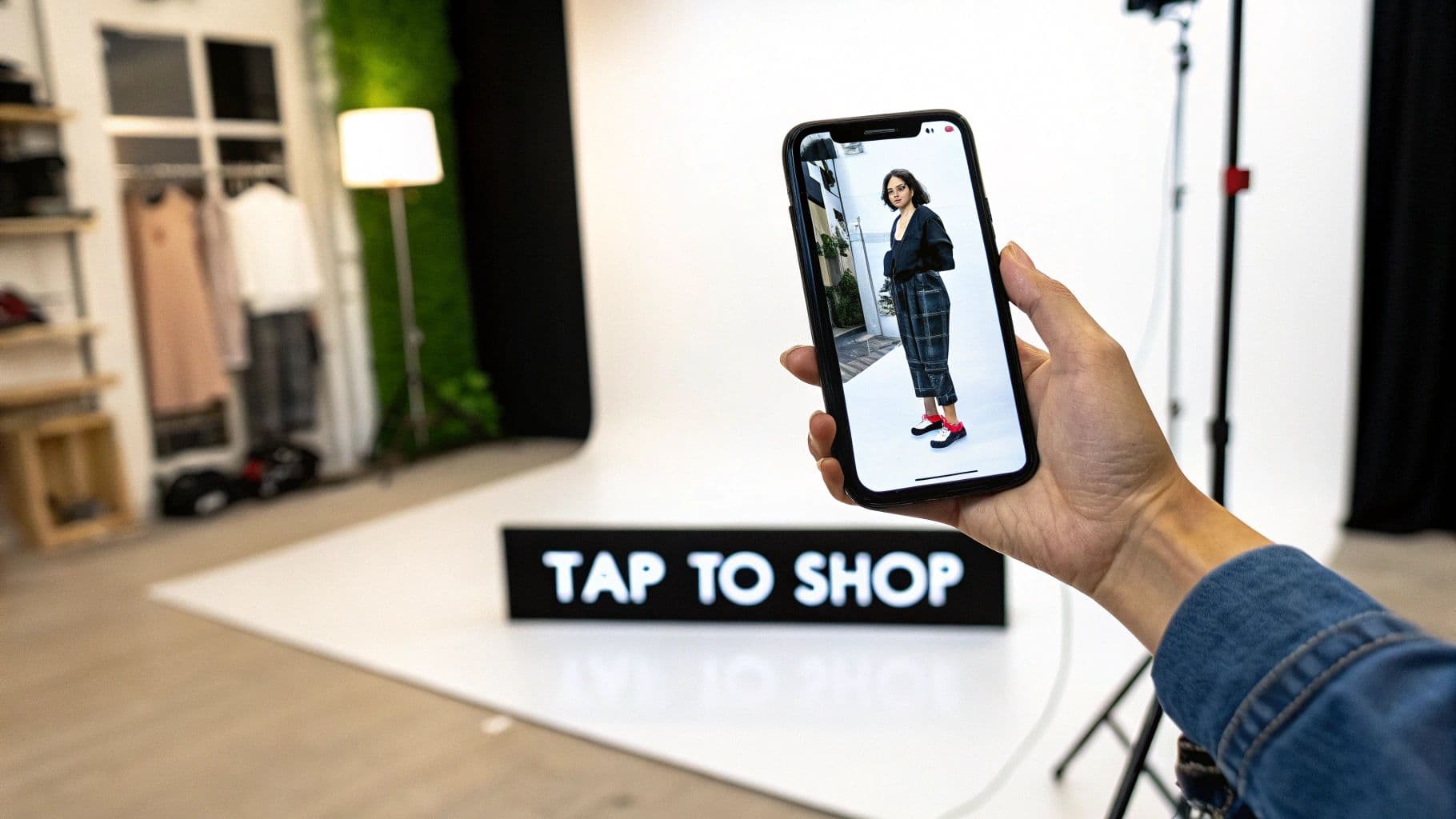
This method thrives on the platform's native features. For example, a fashion brand like Fashion Nova might use a "before and after" outfit transformation synchronized to a trending audio clip, immediately demonstrating the product's value. Similarly, an interior designer can show a dramatic room makeover, cutting from the cluttered "before" to the stunning "after" to create a powerful emotional impact. The core of these ad scripts examples is a potent combination of visual storytelling and a clear, direct call to action.
Strategic Breakdown and Tips
- Open with a Bold Visual: The first frame must contain movement or a significant visual change. This could be a person jumping into a new outfit, a room transforming, or a product unboxing in fast-motion.
- Reinforce with Text Overlays: Since many users watch videos without sound, use text to highlight key benefits, prices, or calls to action. Phrases like "The Viral Dress is Back!" or "50% Off Today Only" work well.
- Leverage Trending Audio: Using trending sounds helps your ad feel more native to the platform and can increase its reach through Instagram's algorithm. Ensure the audio complements your brand's message rather than overpowering it.
- End with a Clear CTA: The final 2-3 seconds should be dedicated to a strong call to action. Use platform-specific prompts like "Tap the Link in Bio to Shop" or Instagram's native "Shop Now" button. You can explore more options by reading this guide to writing a script for advertising.
2. TikTok Native Ad Script (9-15 seconds)
TikTok native ad scripts are designed to feel organic and non-promotional, blending seamlessly with the user-generated content that dominates the platform. This approach prioritizes entertainment and relatability over a hard sell, using trending sounds, humor, and user-centric formats to capture the attention of a Gen-Z-heavy audience. The goal is to create an ad that doesn't feel like an ad, making the viewer forget they are being marketed to. This strategy is highly effective for direct-to-consumer brands, beauty products, and any business that can showcase its offerings in a casual, everyday context.
This method thrives on authenticity and leverages the platform’s unique culture. Brands like Duolingo and Ryanair have mastered this by personifying their brands and participating in trends with a self-aware, humorous tone. A beauty brand might use a "Get Ready With Me" (GRWM) format to subtly feature a new foundation, or a small business owner could film a day-in-the-life video showing their products being packed and shipped. The power of these ad scripts examples lies in their ability to build community and trust by entertaining first and selling second.
Strategic Breakdown and Tips
- Start with Sound: Unlike other platforms, TikTok is a sound-on environment. Identify a trending audio clip from TikTok's sound library first, then build your script and visual concept around it to maximize algorithmic reach and cultural relevance.
- Prioritize Watch-Through Rate: The primary success metric on TikTok is watch time. Aim for a 60-70% watch-through rate by making the entire video, not just the hook, engaging. The ad should feel like a mini-story or a satisfying loop.
- Use Captions for Extra Punch: On-screen text captions should add a layer of humor, context, or surprise to the visuals. They are part of the entertainment, not just a reinforcement of the message.
- Keep it Authentic: Avoid overly polished or corporate-looking visuals. Use a smartphone to film, embrace natural lighting, and let the content speak for itself rather than explicitly asking for follows or likes. After perfecting your script, you can leverage a TikTok clip maker to create viral shorts fast and produce content at scale.
3. YouTube Shorts Ad Script (15-60 seconds)
YouTube Shorts ad scripts are designed for a vertical, fast-paced viewing experience where ads compete directly with organic creator content. This format blends the high-energy, quick-cut style of TikTok with YouTube's typically higher production values. Scripts for Shorts must deliver a clear value proposition and a compelling call to action almost immediately, balancing entertainment with a strong conversion goal. These ad scripts examples are perfect for brands in e-commerce, real estate, and SaaS that want to capture attention without disrupting the user's discovery flow.
This format leverages the platform's massive audience by feeling native to the Shorts feed. For instance, a real estate agent might create a rapid-fire property walkthrough that builds curiosity before revealing the price in a bold text overlay. Similarly, a SaaS company can show a quick "before and after" of a user's workflow, demonstrating the software's efficiency in under 30 seconds. The script's success hinges on its ability to deliver information and value so quickly that the viewer doesn't even think about skipping.
Strategic Breakdown and Tips
- Use a Static Hook Frame: Begin with a compelling static image for the first 1-2 seconds, paired with an intriguing text hook like "This gadget sold out in 24 hours." This gives the viewer a moment to register the topic before the motion starts.
- Reinforce Audio with On-Screen Text: Assume users might be watching with the sound off. Your script's key points, benefits, and calls to action should be mirrored with synchronized, easy-to-read text overlays.
- Leverage Captions for Accessibility: Use YouTube's built-in captioning feature or burn captions directly into your video. This not only makes your ad accessible but also improves comprehension and retention for all viewers.
- End with a Strong CTA: The final 3-5 seconds must guide the viewer. Use clear, direct commands like "Shop Now," "Learn More," or "Subscribe for More" combined with visual cues pointing to the clickable element. To further hone your skills in developing compelling content, explore advanced techniques for crafting effective YouTube video scripts.
4. The Data-Driven Opener: LinkedIn Video Ad Script (6-15 seconds)
LinkedIn video ads operate in a unique professional ecosystem, requiring a script that is concise, credible, and immediately communicates value. Unlike the entertainment-first approach of other platforms, LinkedIn ads must capture the attention of a business-minded audience focused on professional growth, efficiency, and ROI. These short, 6 to 15-second scripts are designed to stop a user’s scroll with a compelling data point or a clear business problem, establishing authority and relevance instantly. They are highly effective for B2B SaaS, corporate training, financial services, and high-end consulting where data-backed claims build trust.
This approach leverages the platform's professional context. For instance, a SaaS company like HubSpot might open with an on-screen text overlay stating, "Marketing teams waste 15% of their time on manual tasks." This hook immediately resonates with their target audience's pain points. Similarly, a financial advisory firm could show a dynamic graph illustrating market volatility before introducing their solution. The core of these ad scripts examples is to present a problem or opportunity backed by a compelling statistic and then quickly pivot to the solution.
Strategic Breakdown and Tips
- Lead with a Statistic or Pain Point: The first three seconds are critical. Open with a powerful, attention-grabbing statistic or a relatable business problem. For example, "Did you know 70% of digital transformation projects fail?"
- Maintain Professional Visuals: Use clean, high-quality visuals, professional stock footage, or polished animations. Avoid jarring cuts or overly casual user-generated content that can feel out of place in a professional feed. The goal is credibility.
- Use Captions and On-Screen Text: A significant portion of LinkedIn users browse with the sound off. Ensure your entire message is conveyed through clear, easy-to-read captions and bold text overlays that highlight key numbers and benefits.
- End with a Soft Call to Action: The CTA should feel professional and low-commitment. Phrases like "Learn More," "Download the Report," or "Discover How" are more effective than aggressive "Buy Now" language. The objective is to guide the user to a resource where they can gather more information.
5. Facebook/Meta Carousel Video Ad Script (4-6 cards, 5-15 seconds)
The Facebook/Meta carousel video ad script uses a series of short, sequential video clips (or a mix of video and images) that users can swipe through. Each card acts as a mini-scene in a larger narrative, making it an incredibly versatile format. This approach allows advertisers to showcase multiple products, highlight different features of a single item, or tell a step-by-step story, all within one interactive ad unit. It’s particularly powerful for industries like real estate, e-commerce, and home renovation, where a visual progression is key to conveying value.
This format breaks a single message into digestible, engaging chapters. For instance, a real estate agent can guide a user through a property tour: the first card shows the exterior, followed by cards for the living room, kitchen, and master bedroom, with the final card revealing the price and a call to action. Similarly, an e-commerce brand can use the cards to display a product's unboxing, key features, styling options, and a customer testimonial. These ad scripts examples function as a mini-story that encourages active user participation through swiping.
Strategic Breakdown and Tips
- Make the First Card an Unmissable Hook: The initial card must grab attention instantly. Use a dramatic "before and after" shot, an eye-catching product reveal, or the most compelling visual to prevent users from scrolling past.
- Tell a Cohesive Story: Ensure a logical flow from one card to the next. Use consistent branding, color grading, and a continuous music track to tie the separate videos together into a unified experience.
- Write Unique Headlines for Each Card: Don't repeat the same message. Use each card's headline to highlight a specific feature or benefit, like "Spacious Open-Concept Kitchen" or "Durable, All-Weather Fabric."
- Place the CTA Strategically: The primary, hard call to action should be on the final card. However, you can use softer CTAs like "Swipe to See More" on earlier cards to encourage further engagement.
- Ensure Each Card Stands Alone: While the cards work together, remember that not every user will swipe through the entire carousel. Design each card to be compelling on its own, conveying a piece of valuable information independently. To get started, you can find a guide on how to create video ads.
Ready to create video ads?
Turn your photos into scroll-stopping ads in minutes. No video editing skills required.
Try For Free6. Google Performance Max Video Ad Script (15-30 seconds, multiple aspect ratios)
Google Performance Max (PMax) campaigns require a flexible, asset-based approach to video ad scripts. Unlike single-platform ads, PMax videos are dynamically served across Google's entire ecosystem, including YouTube, Display, Search, and Gmail. This means scripts must be effective in multiple aspect ratios (16:9, 9:16, 1:1) and deliver a clear message with or without sound, as Google's algorithm optimizes placement automatically for maximum conversions. These scripts are less about a single narrative and more about creating a modular set of compelling visual and textual assets.
This method is essential for performance-focused advertisers who want to leverage Google's machine learning capabilities. For example, a real estate agency might supply a video showcasing a property's best features, which Google then combines with dynamic headlines like "Luxury Homes in [User's City]" and serves it as a YouTube pre-roll ad or a display banner. The core of these ad scripts examples is creating a powerful visual hook that works in tandem with algorithmically chosen headlines and descriptions to drive action.
Strategic Breakdown and Tips
- Adopt an Asset-Based Mindset: Your script is just one piece. You'll upload video assets, headlines, descriptions, and images. Design your video to visually complement the text that Google will overlay.
- Design for Silence: A significant portion of PMax placements (like Gmail and Display) will be muted. Use prominent on-screen text overlays, captions, and strong visual cues to convey your value proposition without relying on audio.
- Prioritize the Vertical Format: Create your primary video asset in a 9:16 aspect ratio. It's easier for Google to adapt a vertical video to square (1:1) and horizontal (16:9) formats than the other way around. Ensure key elements are centered to avoid being cropped.
- Front-Load the Brand and Value: Mention or show your product, service, or brand name within the first three seconds. The goal is instant recognition, as you can't predict where or for how long the user will see the ad.
- Create and Test Variations: Don't rely on a single video. Supply 3-5 different video assets to your campaign. Google's AI will test them to find the highest-performing combinations for different audiences and placements, optimizing your campaign automatically.
7. Amazon Streaming Services (Fire TV) Ad Script (15-30 seconds)
Amazon Streaming Services ads are premium video commercials designed for platforms like Fire TV, Twitch, and Prime Video. These scripts blend the high production quality of a traditional TV commercial with the direct-response capabilities of digital advertising. The goal is to capture a captive living room audience with an entertaining, story-driven message while leveraging Amazon's ecosystem to drive immediate action, such as adding a product to a cart with a remote. This format is ideal for brands that can invest in higher production value and want to reach engaged household decision-makers.
This approach moves beyond simple product features and focuses on telling a compelling brand story or demonstrating a product's value in a real-life context. For example, a home improvement brand might show a satisfying time-lapse of a DIY project, while a premium beauty brand could use a testimonial-style narrative to build trust and emotional connection. The power of these ad scripts examples lies in their ability to combine brand-building with seamless, one-click purchasing through the Amazon platform, closing the loop between inspiration and conversion.
Strategic Breakdown and Tips
- Treat It Like a TV Commercial: Invest in professional production, including high-quality video, clear audio, and a polished voiceover. The script should focus on emotional storytelling rather than a hard-sell pitch.
- Balance Story and Product: The first half of the ad should set a scene or introduce a character to build an emotional hook. The middle section should seamlessly integrate the product as the solution or hero of the story.
- Leverage a Professional Voiceover: The voiceover should match your brand’s emotional tone, whether it's inspiring, trustworthy, or energetic. Avoid a salesy, announcer-style delivery that can feel out of place in a streaming environment.
- End with a Clear Brand CTA: Conclude with strong brand messaging, your logo, and a clear call to action tailored to the platform, such as "Shop Now on Amazon" or "Ask Alexa to Add to Cart." Ensure all on-screen text is large and clear enough to be read from a distance on a TV screen.
8. Pinterest Video Pin Ad Script (15-30 seconds, vertical or square)
Pinterest Video Pin ad scripts are designed for a platform where users are actively planning and gathering inspiration, making them fundamentally different from interruption-based ads. These scripts focus on aesthetics, transformation, and lifestyle integration, tapping into the platform's aspirational and discovery-oriented nature. The goal is less about a hard sell and more about showing how a product fits into a user's desired future, whether that's a home renovation, a new outfit, or a creative project.
This approach works exceptionally well for brands in the home décor, fashion, and DIY spaces. For instance, an interior design brand like West Elm might create a video pin showing a bland corner of a room transforming into a cozy, stylish reading nook, highlighting specific products without aggressive sales language. These ad scripts examples are built on visual storytelling, demonstrating the value and beauty of a product within an authentic, inspiring context that encourages users to save the idea for later, driving high-intent traffic.
Strategic Breakdown and Tips
- Prioritize Silent Storytelling: Many users browse Pinterest with the sound off. Your video must be visually compelling enough to convey its message without audio. Use high-quality, aesthetically pleasing footage that tells a clear story of transformation or use.
- Show, Don't Just Tell: Instead of listing features, demonstrate the product in a lifestyle context. Show an outfit being styled for different occasions or a piece of furniture being used in a beautifully decorated room. This helps users visualize the product in their own lives.
- Use Subtle Text Overlays: Add non-intrusive text overlays to provide context or highlight key ideas. Phrases like "Small Bathroom, Big Style" or "3 Ways to Style a White Tee" serve as gentle hooks that complement the visual narrative.
- Align CTA with Pinterest's Ethos: Calls to action should feel native to the platform's planning mindset. Use softer, more inspirational language like "Discover More Ideas," "Shop the Look," or "Save for Later" rather than aggressive commands like "Buy Now!"
- Maintain Aesthetic Consistency: Your video pins should share a consistent visual identity, including color grading and style. This builds brand recognition and makes your profile a go-to source for inspiration, encouraging follows and repeat engagement.
9. The Problem-Solution-Proof: In-Feed Ad Script (30-60s)
The Problem-Solution-Proof model is a classic persuasion technique perfectly adapted for in-feed video ads on platforms like Facebook and Instagram. This script structure first identifies a common pain point the target audience experiences, then introduces the product as the ideal solution, and finally provides proof to build credibility and trust. Its effectiveness lies in its relatable, narrative-driven approach that hooks viewers by acknowledging a familiar frustration before offering a clear, validated remedy. This format works exceptionally well for home goods, beauty products, and B2B SaaS tools where demonstrating tangible results is key.

This method builds a logical and emotional case for the product. For instance, a home organization brand might start with a shot of a messy, chaotic closet (the problem). It then introduces its modular storage system, showing how easily it creates order (the solution). The final segment would feature a customer testimonial video clip or a "5-star rating" graphic overlaid on the perfectly organized closet (the proof). These types of ad scripts examples are powerful because they guide the viewer through a journey from frustration to satisfaction, making the purchase decision feel both logical and compelling.
Strategic Breakdown and Tips
- Lead with the Pain Point: Start your video with a clear visual or question that highlights the problem. Use on-screen text like, "Tired of your messy kitchen?" or "Can't find anything in your closet?" to grab attention immediately, even with the sound off.
- Show, Don't Just Tell, the Solution: The middle section should be a dynamic demonstration of your product in action. Use quick cuts and satisfying visuals to show how it solves the initial problem seamlessly. This is where the product becomes the hero of the story.
- Provide Concrete Proof: Your proof must be convincing and easy to digest. Use social proof like customer reviews, before-and-after transformations, user-generated content, or expert endorsements. A simple text overlay stating "Over 10,000 Happy Customers" can be highly effective.
- Create a Sense of Urgency in the CTA: Conclude with a clear call to action that encourages immediate action. Phrases like "Get 20% Off Your First Order" or "Click to Organize Your Life Today!" work well with a "Shop Now" or "Learn More" button.
Comparison of 9 Video Ad Script Examples
| Ad Type | Format & Duration | Implementation Complexity | Resource Requirements | Expected Outcomes | Ideal Use Cases | Key Advantages |
|---|---|---|---|---|---|---|
| Instagram Reels Video Ad Script (15-30s) | Vertical 9:16, 15–30s | Medium — fast edits, strong 3s hook | Low–Medium — mobile shoots, trending audio, frequent posting | High organic reach; ROI ~3–8x (fashion/beauty) | E‑commerce, lifestyle, real estate quick demos | Native shopping, trending audio, high algorithmic visibility |
| TikTok Native Ad Script (9-15s) | Vertical 9:16, 9–15s | Medium–High — rapid trend adaptation, authentic tone | Low — casual production but constant trend monitoring | Very high engagement; viral upside; ROI 5–12x (viral) | Youth‑targeted D2C, beauty/fashion, trending launches | Strong viral potential, Gen‑Z reach, sound‑first algorithm |
| YouTube Shorts Ad Script (15-60s) | Vertical 9:16 or 1:1, 15–60s | Medium — quicker pacing but higher polish than TikTok | Medium — better production, captions, repurposing long form | Broad reach across ages; ROI ~3–9x depending on goal | Brands seeking longevity, higher‑ticket items, education | YouTube ecosystem integration, repurposing long‑form content |
| LinkedIn Video Ad Script (6-15s) | 16:9 or 9:16, 6–15s | High — professional tone, data-driven hook | High — pro production, case studies, polished VO | Strong B2B lead quality; ROI 5–20x (lead gen/recruitment) | B2B SaaS, professional services, recruitment | Targets decision‑makers, credibility, measurable analytics |
| Facebook/Meta Carousel Video Ad Script (4–6 cards) | 4–6 cards, each 5–15s | High — multi-card sequencing and narrative flow | High — multiple videos, consistent grading and CTAs | High engagement for storytelling; ROI ~3–10x | Real estate, interior design, portfolio e‑commerce | Multi‑angle storytelling, per‑card CTAs, swipe engagement |
| Google Performance Max Video Ad Script (15–30s) | Multi‑aspect (16:9, 9:16, 1:1), 15–30s | Medium — asset‑heavy, less direct control (AI optimizes) | Medium — many ratios/assets, captions, headlines | Very broad reach across Google; ROI 2–6x (variable) | Performance marketing, e‑commerce, multi‑channel campaigns | Auto‑optimization, cross‑channel reach, simplified management |
| Amazon Streaming (Fire TV) Ad Script (15–30s) | Horizontal 16:9 (TV), 15–30s | High — cinematic storytelling, broadcast standards | Very High — full production, approvals, companion integration | Premium audience, strong brand lift; ROI 3–15x | Premium brands, high‑ticket retail, luxury real estate | Full‑audio environment, Amazon purchase integration, premium placement |
| Pinterest Video Pin Ad Script (15–30s) | Vertical 9:16 or 1:1, 15–30s | Medium — strong aesthetic and visual-first execution | Medium — styled shoots, consistent color grading | High purchase intent and long content lifespan; ROI 5–15x | Interior design, home décor, fashion, lifestyle | Discovery-driven intent, long longevity, aspirational audience |
Turn Your Script into a High-Converting Video Instantly
We've dissected a wide array of ad scripts examples, from fast-paced TikTok hooks to professional LinkedIn narratives. Across every format and industry, a clear pattern emerges: success isn't just about what you say, but how you structure your message for the specific platform and audience. The right script is a strategic blueprint for capturing attention and driving action.
The examples in this guide demonstrate that a powerful ad script is built on a foundation of core principles. It starts with an undeniable hook within the first three seconds, transitions into a clear value proposition, and culminates in a compelling call to action. Whether it's a 15-second Instagram Reel or a multi-card Facebook Carousel, these structural elements are the constants that deliver results.
From Blueprint to Performance: The Key Takeaways
Mastering the art of scriptwriting is a significant competitive advantage. By understanding the nuances of timing, tone, and tactical hooks, you move from creating generic ads to engineering high-performance marketing assets.
Here are the most important lessons to carry forward from the ad scripts examples we’ve explored:
- The Hook is Everything: You have less than three seconds to stop the scroll. Your opening line or visual must immediately address a pain point, spark curiosity, or present a compelling benefit.
- Platform-Native is Non-Negotiable: An ad that feels like a natural part of the user's feed will always outperform a generic, repurposed video. Adapt your script's language, pacing, and visual style to match the platform's culture.
- Clarity Trumps Complexity: Viewers are scrolling quickly. A simple, direct message that clearly communicates your product's value and tells the user exactly what to do next will win every time. Avoid jargon and focus on a single, powerful idea.
- The CTA Must Be Action-Oriented: A weak call to action wastes the attention you've worked so hard to capture. Use strong verbs like "Shop," "Learn," "Subscribe," or "Claim" to guide your audience toward the next step with confidence.
Bridging the Gap Between Script and Screen
Understanding these principles is the first half of the battle. The second, and often more challenging, half is execution. The gap between a brilliant script on a document and a polished, high-converting video can be a major bottleneck, often filled with expensive software, time-consuming edits, and the need for specialized skills. This is where modern technology creates an undeniable advantage.
A powerful AI video generation platform allows you to instantly transform your script into a finished ad. Instead of spending days or weeks in production, you can test dozens of script variations in minutes. Imagine taking the core structure of a successful e-commerce ad script, uploading your product images, and letting an AI tool generate five different versions with unique hooks and CTAs. This level of speed and agility allows you to iterate faster, learn from real-world data, and scale your winning campaigns without being held back by production constraints.
The future of advertising is not just about having great ideas; it's about how quickly you can bring them to life. By leveraging AI, you can close the gap between script and screen, turning your strategic blueprints into tangible, revenue-driving assets almost instantly. The best ad script is the one that gets seen, and modern tools ensure your creative work never gets stuck in a production queue again.
Ready to turn these ad scripts examples into powerful video ads in minutes? Proom AI lets you generate high-converting, platform-optimized videos directly from your script or product assets. Stop waiting on production and start launching your next winning campaign by visiting Proom AI today.
Ready to create video ads?
Turn your photos into scroll-stopping ads in minutes. No video editing skills required.
Try For Free