8 Commercial Script Examples to Drive Sales in 2026
Unlock powerful advertising with these 8 commercial script examples. Get detailed breakdowns, pro tips, and templates to create high-converting video ads today.
Writing a commercial script that grabs attention, holds it, and drives action is a monumental challenge for modern marketers. With attention spans shrinking, the right words, structure, and pacing are no longer optional-they are essential. A powerful script transforms a simple product into a must-have solution, turning passive viewers into active customers. This guide eliminates the guesswork by breaking down the anatomy of high-converting ads.
We have curated a comprehensive collection of 8 proven commercial script examples designed for today's fast-paced platforms. You'll find templates for every objective, from direct-response product showcases and compelling transformation stories to aspirational lifestyle content and trust-building testimonials. We move beyond just showing you the script; we dissect why each one works. For every example, you'll get a strategic analysis, tactical insights, and actionable takeaways you can apply immediately. We cover various lengths, including the crucial 6-second, 15-second, and 30-second formats dominating social feeds.
Each script is designed to be a springboard for your own creativity. We'll show you how to adapt these frameworks for your specific product, audience, and goals. To kickstart your creative process, consider utilizing an AI script generator to instantly create professional video scripts, streamlining your journey from concept to compelling ad. Whether you're a seasoned advertiser or a small business owner creating your first video, these examples provide the structural foundation needed to craft ads that not only get noticed but also deliver measurable results. Let's dive in.
1. Product Showcase/Demonstration
A Product Showcase or Demonstration script is a classic and highly effective format designed to put your product in the spotlight. Its primary goal is to visually and audibly communicate a product's features, functionality, and most importantly, its benefits. This approach moves beyond simply telling the audience what a product does; it shows them, creating a tangible sense of value and desire.
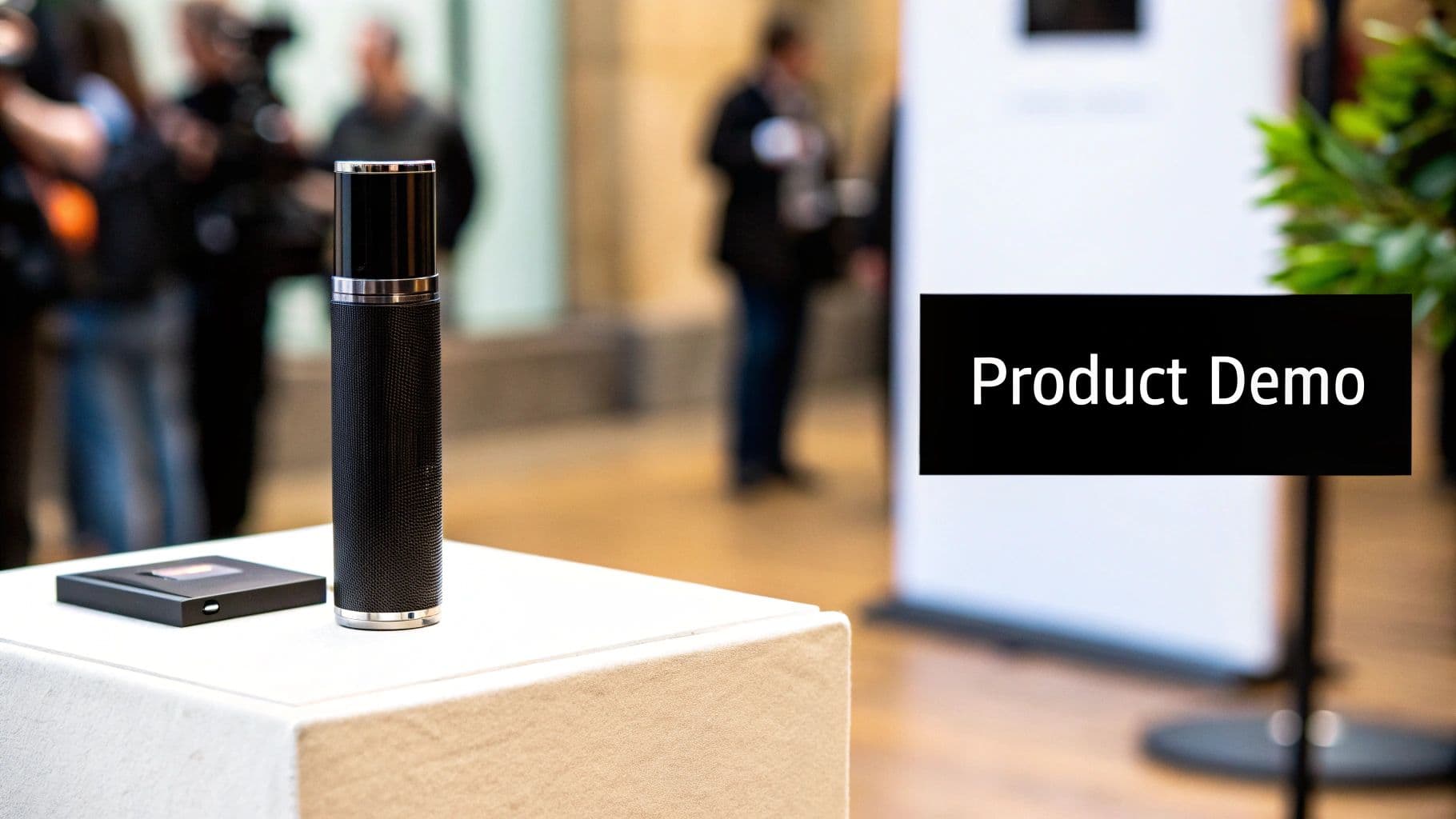
This format is a cornerstone for e-commerce, tech, and CPG brands. Think of Apple's crisp, minimalist product reveals or Dyson's satisfying visuals of sucking up debris. These ads work because they answer the consumer's core question: "What will this do for me?" They build trust through transparency and prove the product's claims in real-time.
Strategic Breakdown
The most successful product demonstration commercial script examples follow a simple but powerful structure: Problem, Solution, Benefit. They introduce a common pain point, present the product as the hero or solution, and conclude by showcasing the rewarding outcome. For instance, a blender ad might start with the frustration of chunky smoothies (problem), introduce its powerful vortex blending technology (solution), and end with a shot of someone enjoying a perfectly smooth drink (benefit).
This format excels at:
- Visualizing Transformation: It’s perfect for showing dramatic "before-and-after" scenarios, ideal for home goods, beauty products, or software.
- Highlighting USPs: Close-up shots and slow-motion effects can emphasize unique selling points like superior materials, intricate design, or innovative technology.
- Building Credibility: Showing the product work as advertised removes doubt and builds consumer confidence, shortening the path to purchase.
Actionable Takeaways & Tips
To make your product demo script effective, focus on clarity and impact. Lead with the single most compelling feature or benefit to hook the viewer within the first three seconds. Use a dynamic editing pace with quick cuts to maintain engagement, and overlay text captions to explain key features as they appear on screen.
Remember to show the product in a relatable, real-world context to help viewers imagine it in their own lives. For more inspiration on how to structure your visuals and messaging, analyzing various product demonstration examples can provide a wealth of ideas for different industries. Conclude your script with a strong, unambiguous call-to-action (CTA) like "Shop Now" or "Learn More" to guide the viewer’s next step.
2. Transformation/Before-and-After
The Transformation or Before-and-After script is a visually compelling format that thrives on a simple, universal human desire: to see positive change. This script capitalizes on the emotional impact of a dramatic reveal, showing a clear, tangible improvement from a previous state. It’s a narrative of progress that resonates deeply with audiences, making it incredibly effective and shareable.
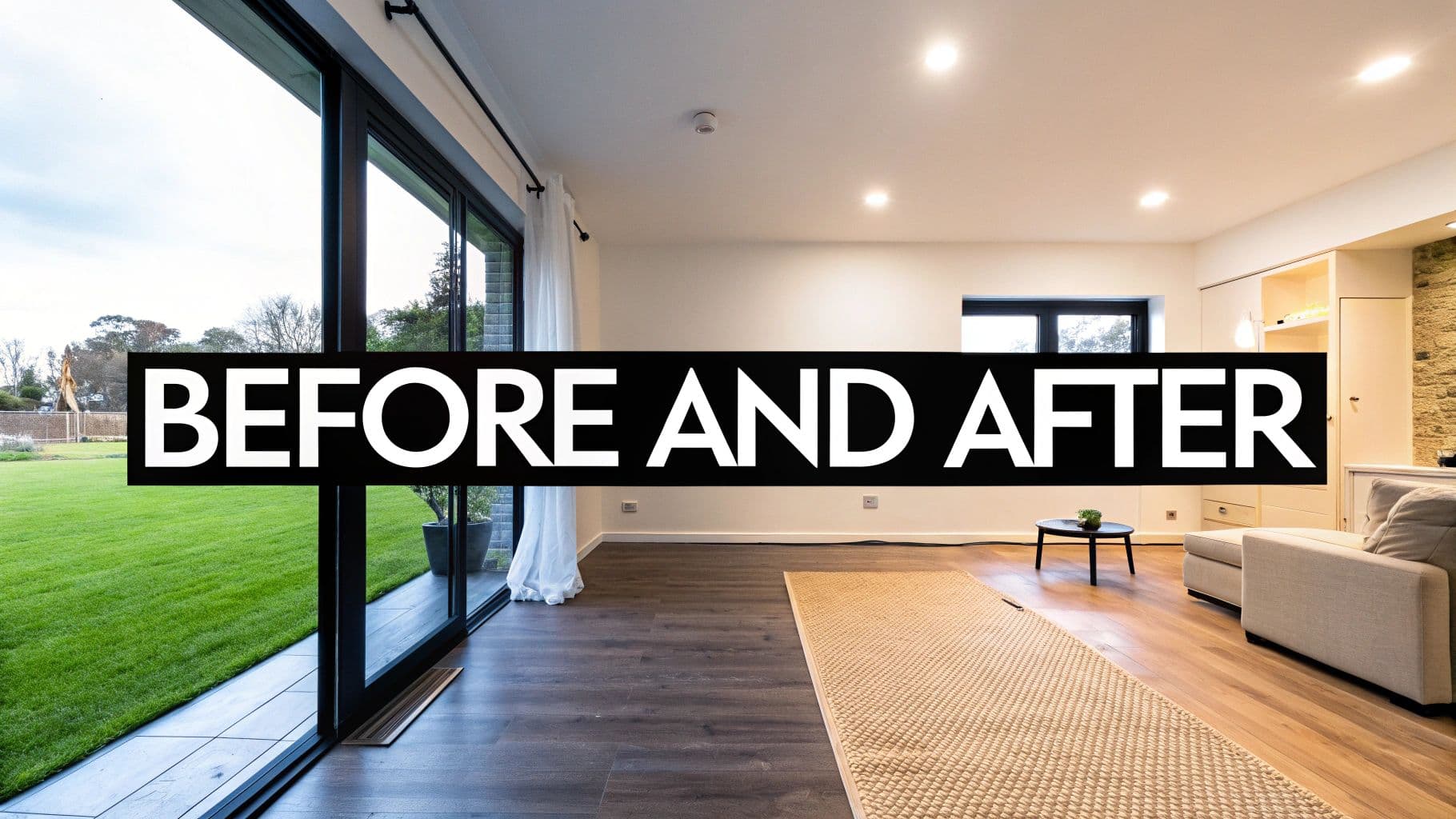
This format is a powerhouse for industries where the results are visually striking, such as fitness, beauty, home improvement, and real estate. Think of home renovation shows on HGTV, viral hair salon makeovers, or powerful fitness journey videos. They all tell a story of overcoming a challenge or a flaw, culminating in a satisfying and aspirational outcome.
Strategic Breakdown
The core of a successful transformation script is a clear Problem, Process, and Payoff structure. It begins by establishing the "before" state as the problem (a dated kitchen, a dull complexion). It then briefly showcases the service or product as the agent of change (the process). Finally, it delivers the "after" state as the rewarding payoff, creating a powerful emotional release for the viewer.
This script type excels at:
- Creating High Contrast: The stark difference between the "before" and "after" visuals immediately demonstrates value and expertise without needing extensive explanation.
- Building Aspiration: It allows viewers to project their own desires onto the outcome, whether it's a dream home, a new look, or a healthier lifestyle.
- Validating Your Service: The visual proof acts as a powerful testimonial, building immense trust and credibility for your brand's capabilities.
Actionable Takeaways & Tips
To maximize the impact of your transformation commercial script examples, focus on storytelling and visual contrast. Shoot the "before" scenes with less flattering lighting to emphasize the problem, then use bright, vibrant lighting for the "after" reveal. Use dynamic transitions like a split-screen or a quick wipe to make the change feel momentous.
Incorporate on-screen text to highlight key improvements, project timelines, or client satisfaction quotes to add context and authority. Use uplifting music to build emotional momentum leading into the final reveal. Conclude with a CTA that invites the viewer to achieve their own transformation, such as "Start Your Renovation Journey" or "Book Your Consultation Today."
3. Lifestyle/Aspirational
A Lifestyle or Aspirational script sells a dream, not just a product. This format positions a brand or item within an idealized context, focusing on how it enhances personal identity, status, or daily experience. It connects with the audience on an emotional level, appealing to their desires and aspirations rather than just listing features. This approach is about creating a feeling that the product is a key to a more desirable life.

This powerful format is a favorite for premium brands in fashion, wellness, and luxury goods. Think of Nike's campaigns that aren't about shoes but about the journey to greatness, or a luxury car ad that sells the feeling of freedom and success on an open road. These ads work because they answer the consumer's subconscious question: "Who do I want to be?" They build brand loyalty by making the consumer feel understood and inspired.
Strategic Breakdown
The most effective lifestyle commercial script examples focus on Emotion, Association, and Transformation. They evoke a powerful emotion (joy, peace, confidence), associate that feeling directly with the brand, and subtly suggest a personal transformation is possible through the product. For example, a wellness app commercial might open with serene visuals of a sunrise (emotion), show a character calmly using the app (association), and conclude with them confidently navigating a busy day (transformation).
This format excels at:
- Building Brand Identity: It goes beyond product function to establish what the brand stands for, creating a loyal community.
- Targeting Core Desires: It taps into fundamental human wants like belonging, self-improvement, or happiness, making the message deeply resonant.
- Justifying Premium Pricing: By selling an experience or a status symbol rather than a simple commodity, it builds perceived value that supports a higher price point.
Actionable Takeaways & Tips
To create a compelling aspirational script, you must first clearly define the target lifestyle and the emotions you want to evoke. Use high-quality, cinematic visuals and a premium soundtrack that aligns with your brand's aesthetic. The opening seconds must establish an emotional hook, drawing the viewer into the world you’ve created.
Feature relatable people achieving aspirational goals to help viewers see themselves in the narrative. Brand messaging should be subtle; let the visuals and the story do the heavy lifting. Conclude with a call-to-action that feels like an invitation to join this desirable lifestyle, such as "Begin Your Journey" or "Discover the Feeling," rather than a hard "Buy Now."
4. Testimonial/Social Proof
A Testimonial or Social Proof script leverages the power of authentic customer voices to build trust and credibility. Instead of the brand making claims, this format lets satisfied customers share their positive experiences, success stories, and genuine reviews. It's a powerful approach that taps into the psychological principle that people trust peers more than they trust advertisements.
This format is a go-to for service-based businesses, SaaS companies, and e-commerce stores where trust is a major factor in the purchase decision. Think of Amazon's customer review videos or a SaaS platform showcasing a case study where a client achieved massive growth. These commercial script examples work by providing relatable, third-party validation that the product or service delivers on its promises, effectively answering the consumer’s question: "Has this worked for someone like me?"
Strategic Breakdown
Effective testimonial scripts are built on a narrative of transformation, mirroring the structure of Pain, Journey, Resolution. They begin by introducing the customer's initial problem or challenge (Pain), walk through how the product or service helped them overcome it (Journey), and conclude with the specific, positive results they achieved (Resolution). For example, a student on an e-learning platform might describe struggling to learn a skill, explain how the course's structure helped, and end by showing a certificate or a new job they landed.
This format excels at:
- Building Authenticity: Genuine emotional responses and specific, unscripted language create a powerful connection that polished marketing copy often can't match.
- Overcoming Objections: Testimonials can directly address common customer doubts or hesitations by featuring a user who had the same concerns but found success.
- Highlighting Quantifiable Results: Featuring customers who can share concrete metrics, like "increased revenue by 30%" or "saved 10 hours per week," provides tangible proof of value.
Ready to create video ads?
Turn your photos into scroll-stopping ads in minutes. No video editing skills required.
Try For FreeActionable Takeaways & Tips
To create a compelling testimonial, focus on authenticity and specificity. Feature a diverse range of customers to ensure your audience can see themselves in the stories. It's crucial to guide the testimonial to include quantifiable results or specific details about their transformation, as this adds immense credibility. Keep individual clips concise, ideally 20-30 seconds, to maintain viewer engagement.
Always include names, photos, or credentials to reinforce authenticity. You can also use AI presenters to deliver these testimonials in a consistent, professional, and multilingual format, making it easier to scale your social proof efforts. For more in-depth strategies, exploring different testimonial ads examples can reveal creative ways to present customer stories. Always end with a CTA that encourages viewers to experience the same success, such as "Start Your Free Trial" or "Get Your Custom Quote."
5. Educational/How-To
The Educational or How-To script format moves beyond direct selling to provide genuine value, teaching the audience something useful related to the product or industry. Its core purpose is to build trust and authority by positioning the brand as a helpful expert. Instead of just advertising a product, it solves a problem or teaches a skill, with the product naturally integrated as an essential tool for success.
This format is a powerhouse for brands in niches where customers seek guidance, such as DIY home improvement, software, cooking, or creative arts. Think of a paint company creating a 60-second tutorial on "How to Paint the Perfect Accent Wall," or a software brand showing a quick tip to master a complex feature. These commercial script examples work because they attract viewers who are actively looking for solutions, making them a highly qualified and engaged audience.
Strategic Breakdown
A successful Educational/How-To script follows a Hook, Teach, Reveal structure. It starts by presenting a desirable outcome or a common challenge (Hook), breaks down the solution into simple, easy-to-follow steps (Teach), and seamlessly integrates the product as the key to achieving the final result (Reveal). For example, a video on real estate staging tips might hook viewers with "Make your home sell 50% faster," teach three simple staging tricks, and reveal how their specific decor product makes it effortless.
This format excels at:
- Building Authority and Trust: By offering valuable information for free, brands establish themselves as credible experts, fostering long-term customer loyalty.
- Driving Organic Reach: Educational content is highly shareable and has strong SEO potential, as it answers questions users are actively searching for.
- Demonstrating Product Value: It showcases the product in a practical, real-world application, proving its utility and effectiveness without a hard sell.
Actionable Takeaways & Tips
To create an effective how-to script, start with a hook that clearly states the benefit or what the viewer will learn. Break down the process into 3-5 digestible visual steps, using on-screen text and graphics to reinforce key information. A great tactic is to address a common mistake and show how your product helps users avoid it, adding another layer of value.
Keep the pacing brisk and focus on visual storytelling. Show, don't just tell. Conclude by summarizing the final, successful outcome and providing a clear call-to-action (CTA) that encourages the viewer to apply what they've learned, such as "Try it yourself" or "Get the tools you need today." This turns passive viewers into active, engaged potential customers.
6. Hook-Driven/Viral
A Hook-Driven or Viral script is engineered for the fast-paced, scroll-heavy environment of modern social media. Its primary objective is to stop a viewer in their tracks within the first 1-3 seconds. This format prioritizes an irresistible, attention-grabbing opening over a traditional narrative arc, aiming to spark enough curiosity or surprise to hold the viewer's attention long enough for the core message to land.
This format is the lifeblood of performance advertisers and social media marketers on platforms like TikTok, Instagram Reels, and YouTube Shorts. Think of the thousands of "You won't believe what happens next" or dramatic transformation videos. These ads work by disrupting the passive scrolling pattern with a bold claim, a surprising visual, or a curiosity gap, making them essential for brands seeking rapid, scalable reach.
Strategic Breakdown
The most effective hook-driven commercial script examples are built on a simple premise: Hook, Retain, Reward. They lead with the most jarring or intriguing element possible (Hook), sustain that initial momentum with engaging content (Retain), and finally deliver the payoff or brand message (Reward). For instance, a cleaning product ad might open with a seemingly impossible stain on a white shirt (Hook), show a quick, satisfying application of the product (Retain), and end with the perfectly clean shirt reveal (Reward).
This format excels at:
- Interrupting Patterns: It's designed to break through the noise of a user's feed with unexpected visuals, sounds, or text overlays.
- Generating Curiosity: By creating a "knowledge gap" with questions like "The one mistake everyone makes when..." it compels viewers to watch for the answer.
- Maximizing Shareability: Content that is surprising, shocking, or highly relatable is more likely to be shared, amplifying its organic reach.
Actionable Takeaways & Tips
To make your hook-driven script effective, dedicate your creative energy to the first three seconds. Lead with your most powerful visual or provocative statement. Use large, bold text overlays to reinforce the hook, as many users watch with the sound off. Keep the pacing extremely fast to maintain momentum and prevent drop-off.
Leverage trending audio and popular editing styles to make your content feel native to the platform. To truly understand the mechanics of virality and how to craft compelling openings, it's beneficial to analyze what makes a video viral and apply those principles to your script. Always conclude with a clear call-to-action that directs the viewer’s newfound interest, like "Tap to see for yourself" or "Get yours at the link in bio."
7. Story-Driven/Narrative
A Story-Driven or Narrative script format builds your advertisement around a mini-story with a clear beginning, middle, and end. Instead of directly highlighting features, this approach creates emotional engagement by developing characters, introducing a conflict, and providing a satisfying resolution. It's a cinematic and highly memorable format that builds deep brand affinity.
This storytelling format is exceptionally powerful for brands wanting to connect with consumers on a human level. Think of Google's poignant 'Year in Search' videos, Airbnb's "Belong Anywhere" campaigns, or the empowering Always #LikeAGirl initiative. These ads resonate because they tap into universal emotions and experiences, making the brand feel like a character in the viewer's own life story.
Strategic Breakdown
The most impactful story-driven commercial script examples follow a classic narrative arc: Setup, Conflict, and Resolution. The script first introduces a relatable protagonist and their world (setup). It then presents a challenge or emotional obstacle they must overcome (conflict). Finally, it shows how the brand's product or service facilitates a positive, emotional transformation (resolution), tying the brand to the feeling of achievement or connection.
This format excels at:
- Building Emotional Connection: By focusing on human stories, these ads create empathy and make the brand more relatable and memorable than competitors.
- Communicating Brand Values: Narrative ads are the perfect vehicle for showing, not just telling, what your brand stands for, whether it's community, empowerment, or innovation.
- Creating Shareable Content: Emotionally resonant stories are inherently more shareable on social media, giving your campaign organic reach and cultural impact.
Actionable Takeaways & Tips
To craft a compelling narrative script, start with a relatable protagonist and a universal emotional core. Establish the central problem or challenge quickly to hook the audience. Build tension and raise the emotional stakes before revealing how your product or service naturally enables the resolution; the brand should be the helper, not the hero.
Use music and sound design strategically to amplify the emotional journey. Ensure your pacing is dynamic, using a mix of shot lengths to build and release tension. Most importantly, integrate your brand message subtly, allowing the story to be the primary focus. End with a clear statement that reinforces your brand’s positioning or a call-to-action that feels like the natural next step in the viewer’s own story.
8. AI Presenter/Avatar-Driven
An AI Presenter or Avatar-Driven script features a digitally generated human or character to deliver the core message. This format leverages synthetic media to create scalable, customizable, and multilingual video content without the need for live actors or complex shoots. The main objective is to combine the relatable, face-to-face element of a human presenter with the efficiency and flexibility of artificial intelligence.
This innovative format is rapidly gaining traction in sectors like EdTech, FinTech, real estate, and corporate training. Think of an AI instructor guiding you through a software tutorial or a digital real estate agent giving a virtual property tour. These commercials work because they offer a consistent and cost-effective way to produce high volumes of personalized video content, breaking down complex information into an easily digestible, conversational format.
Strategic Breakdown
The strength of an AI presenter script lies in its Consistency, Scalability, and Customization. The core strategy is to build a recognizable digital persona that can deliver varied messages while maintaining a consistent brand voice and appearance. A script for an AI avatar focuses heavily on a clear, direct, and conversational tone, as the visual element is designed to hold attention while the audio delivers crucial information.
This format excels at:
- Rapid Content Creation: Once an avatar is designed, scripts can be generated and rendered into videos in minutes, ideal for time-sensitive promotions or A/B testing different messages.
- Global Reach: AI presenters can deliver the same script in multiple languages with localized accents, making it incredibly efficient for international marketing campaigns.
- Brand Consistency: An AI avatar becomes a unique brand asset, ensuring every video has the same look, feel, and professional delivery, which is difficult to achieve with human actors across multiple projects.
Actionable Takeaways & Tips
To create compelling commercial script examples with AI, write for a natural, human-like delivery. Avoid robotic or overly formal language. Use pauses, varied pacing, and vocal emphasis in the script to make the AI voiceover more dynamic and engaging. Ensure the avatar’s appearance aligns perfectly with your brand identity, from their clothing to their background environment.
Seamlessly integrate the AI presenter with screen recordings, product photos, or B-roll footage to keep the visual experience interesting. For those new to the technology, exploring tutorials on how to make AI videos can provide a solid foundation for scripting and production. Always conclude with a clear and direct call-to-action, guiding the viewer on what to do next after the AI has delivered its message.
8 Commercial Script Styles Compared
| Format | Implementation Complexity | Resource Requirements | Expected Outcomes | Ideal Use Cases | Key Advantages |
|---|---|---|---|---|---|
| Product Showcase / Demonstration | Medium — structured script plus product shots | High-quality product visuals, close-ups, studio/real-world shoots | Higher conversions; clear feature understanding | E-commerce, product launches, short social ads | Persuasive for purchase; shows tangible value quickly |
| Transformation / Before-and-After | Medium–High — precise sequencing and transitions | Quality before/after imagery, staging, editing time | Strong emotional engagement; visible proof of results | Interior design, real estate, beauty, fitness, renovations | Highly shareable; builds trust via visible outcomes |
| Lifestyle / Aspirational | High — cinematic direction and aesthetic control | High production, locations, models, music | Brand affinity and emotional desire | Premium brands, fashion, wellness, luxury products | Creates emotional connection; elevates brand perception |
| Testimonial / Social Proof | Low–Medium — interview or scripted customer clips | Real customer footage or AI presenters, releases, editing | Increased credibility and conversion; lower hesitation | Services, small businesses, SaaS, e‑commerce | Builds trust quickly; highly persuasive and relatable |
| Educational / How-To | Medium — structured, instructional scripting | Subject-matter experts, on-screen graphics, step demos | Authority building; organic reach and long-term value | Tutorials, product walkthroughs, content marketing | Positions brand as expert; evergreen, SEO-friendly content |
| Hook-Driven / Viral | Low–Medium — tight opening, rapid testing required | Eye-catching visuals, quick edits, trend assets | High view-through rates; viral/organic reach potential | Short-form social (TikTok, Reels, Shorts), performance ads | Maximizes attention and shares; optimized for fast performance |
| Story-Driven / Narrative | High — strong storytelling, pacing, casting | Cast, locations, sound design, higher production values | Memorable brand affinity; emotional engagement | Brand campaigns, emotional storytelling, awareness | Deep emotional resonance; builds long-term loyalty |
| AI Presenter / Avatar-Driven | Medium — tech setup plus natural scripting | Avatar creation, voice models, scriptwriting, minimal shoots | Scalable, consistent messaging; multilingual reach | Scalable demos, multilingual testimonials, e-learning, real estate | Cost-effective at scale; consistent quality and global reach |
Turn These Scripts into High-Performing Ads with Proom AI
You’ve explored a comprehensive arsenal of commercial script examples, from lightning-fast 6-second hooks to compelling 30-second narratives. We’ve dissected the underlying psychology, strategic timing, and tactical elements that transform a simple idea into a high-impact advertising asset. The journey through these eight foundational frameworks, covering everything from Product Demonstrations to AI Presenter-driven narratives, reveals a core truth: a great ad starts with a great script.
But a script is only the blueprint. The real magic happens when that blueprint is brought to life with compelling visuals, crisp editing, and a clear voice. The examples we analyzed weren't just words on a page; they were meticulously crafted experiences designed to capture attention, evoke emotion, and drive action. Mastering these script frameworks is the first crucial step toward replicating that success for your own brand.
From Blueprint to Bottom Line: Your Key Takeaways
The most effective ads don't just happen; they are engineered. As you move from studying these commercial script examples to creating your own, remember these critical strategic pillars:
- Structure is Your Ally: Whether it’s the classic AIDA (Attention, Interest, Desire, Action) model or a more modern Problem-Agitate-Solve framework, structure provides clarity. It ensures your message lands with precision, guiding the viewer from curiosity to conversion without confusion.
- The Hook is Everything: In a crowded digital landscape, the first three seconds determine your ad's fate. Your hook must be disruptive, visually arresting, or emotionally resonant. Test different hooks relentlessly, as this single element often has the largest impact on performance metrics.
- Clarity Trumps Cleverness: While clever wordplay can be effective, a message that is easily and instantly understood will almost always perform better. Your audience is scrolling quickly; they don’t have time to decipher a complex metaphor. Prioritize direct, benefit-driven language.
- Match the Medium: A 6-second bumper ad for YouTube requires a different script structure than a 30-second testimonial for a Facebook feed. Always consider the platform's constraints and user behavior when adapting your script. Short, punchy, and sound-off friendly is often the winning combination for social media.
Actionable Next Steps: Putting Your Scripts to Work
Knowledge without action is just potential. Now is the time to bridge the gap between understanding these script examples and launching your next successful campaign. The path forward is clear, and with modern tools, it's more accessible than ever.
- Identify Your Core Message: Before you write a single word, what is the one thing you want your audience to take away? Is it a key feature, a transformative benefit, or a powerful emotional connection? Center your script around this singular idea.
- Choose Your Framework: Based on your product and campaign goal, select the most appropriate framework from the examples above. Launching a new feature? Start with a Product Demonstration script. Building trust? Adapt a Testimonial format.
- Draft and Refine: Write your first draft, focusing on the key beats: the hook, the core value proposition, and the call to action. Read it aloud to check the pacing and timing. Trim any unnecessary words to ensure every second serves a purpose.
- Bring it to Life with AI: This is where the process accelerates. You don't need a massive production budget or an in-house video team to create stunning ads. Tools like Proom AI are designed to transform your refined script and existing product assets into a polished, professional video in minutes.
By systematically applying these principles, you move from being a passive observer of good advertising to an active creator. The commercial script examples in this article are not just templates to be copied; they are strategic guides to be adapted, tested, and mastered. They provide the proven foundation upon which you can build a powerful and profitable advertising engine for your brand.
Ready to turn your powerful new scripts into revenue-generating video ads? With Proom AI, you can use our pre-built templates, AI-powered scriptwriting assistants, and hyper-realistic AI presenters to create high-quality commercials in minutes, not weeks. Stop letting production bottlenecks slow your growth and start creating at the speed of your ideas. Start your free trial with Proom AI today!
Ready to create video ads?
Turn your photos into scroll-stopping ads in minutes. No video editing skills required.
Try For Free