Video Marketing for Small Businesses: Complete Guide
Video marketing for small businesses on $0 budget. Create high-performing content in 2 hours/week. ROI calculator & free tools included →
For most small business owners, getting noticed feels like shouting into the void. Video marketing can feel like just another thing on a never-ending to-do list, something reserved for brands with big budgets and fancy camera crews.
But that’s no longer true. Today, simple, authentic videos—often shot right on your smartphone—are one of the most powerful tools you have to build real trust and drive sales. It’s about cutting through the noise and creating a genuine connection with your customers, turning them from passive scrollers into loyal fans.
Why Video Is Your Small Business Superpower
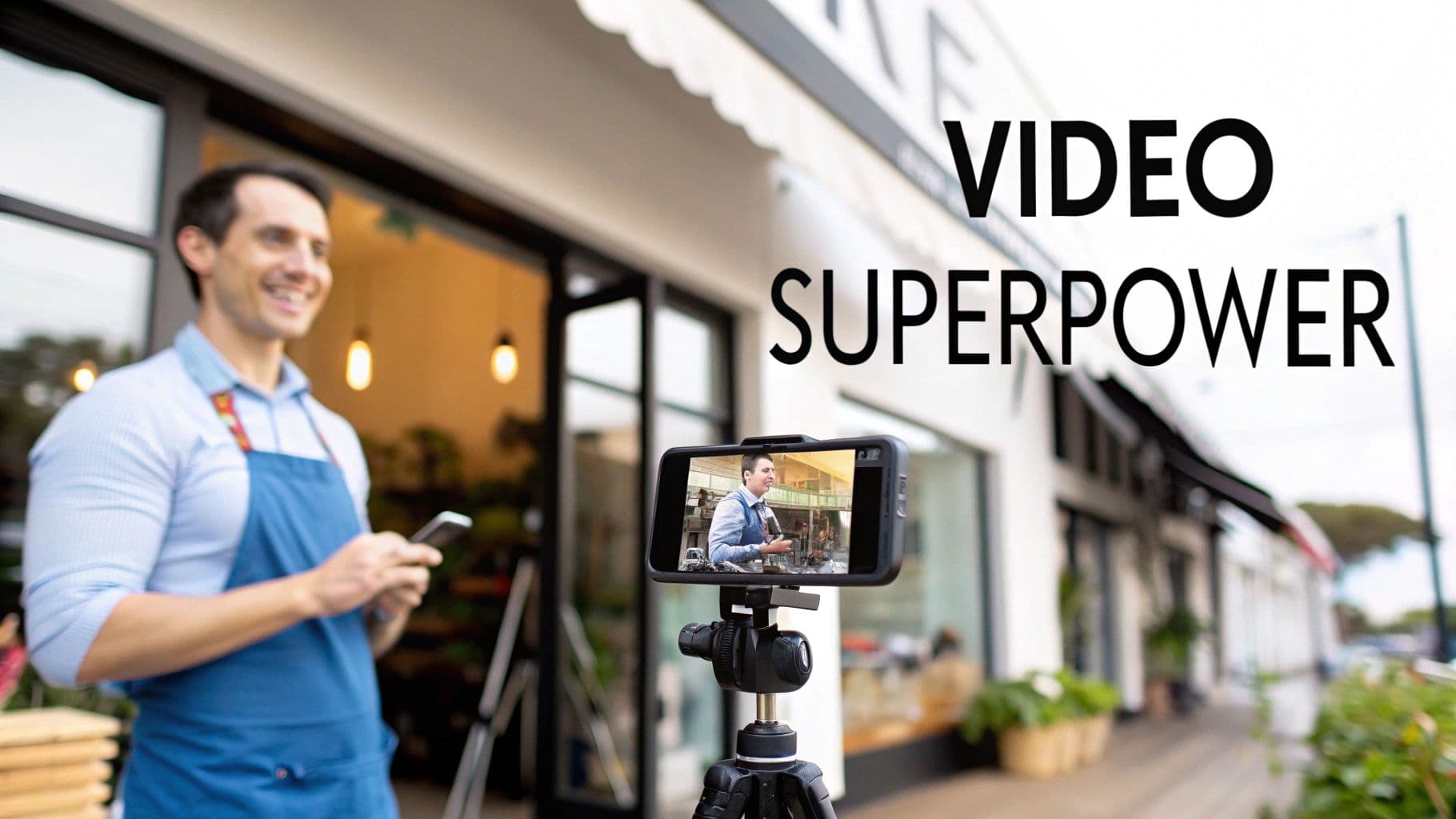
Let's be real: competing in a crowded market is tough. It’s easy to think impactful marketing is out of reach. But video is the great equalizer. It gives you a direct line to your audience in a way that static images and text just can't.
Think about a local bakery struggling to bring people in the door. They could post a photo of a croissant, and that’s fine. Or, they could post a short, behind-the-scenes video of the baker laminating the dough at 5 AM. Suddenly, they're not just selling a pastry; they're selling the craft, the dedication, and the incredible smell you can almost imagine through the screen.
That’s what video does. It transforms your product or service from a simple transaction into a story people want to be a part of.
Video isn’t just about going viral. It's about building a community, one authentic interaction at a time. It’s your chance to show the real people and passion behind your brand.
The Numbers Don't Lie
This shift to video isn’t just a passing trend—it's a fundamental change in how people connect with businesses. The data paints a clear picture: 91% of businesses now count on video as a core marketing tool.
And it’s not just the big players. For smaller companies, the growth is huge, with 55% now using video to engage customers without breaking the bank. More importantly, this stuff actually works. A staggering 90% of marketers report a solid ROI from their video efforts, with many small businesses boosting leads by 87% after adding it to their strategy. You can dive deeper into the latest video marketing statistics to see the full impact.
Video is a powerful shortcut to tangible business results. Here’s a quick look at how it directly moves the needle.
| Benefit | Impact on Your Business | Example Video Type |
|---|---|---|
| Builds Trust Instantly | Customers are more likely to buy from a brand they feel connected to and trust. | A "meet the team" video or a founder story. |
| Boosts Online Visibility | Search engines and social algorithms prioritize video content, putting you in front of more eyes. | An educational "how-to" video or a product demo. |
| Increases Conversions | Seeing a product in action removes doubt and makes the "buy" button irresistible. | A customer testimonial or an unboxing video. |
| Improves Customer Retention | Ongoing video content keeps your brand top-of-mind and builds a loyal community. | A weekly tips series or a behind-the-scenes look. |
Ultimately, video allows you to make a human connection at scale, turning a simple marketing message into a memorable experience.
With a good video strategy, you can:
- Build Trust Faster: There's nothing like seeing a friendly face or a product in action to create an immediate sense of transparency.
- Clarify Your Value: A 60-second explainer video can communicate your unique selling proposition more effectively than pages of text ever could.
- Drive Real Action: Video is a powerful motivator. From website clicks to in-store visits, it gives viewers that final nudge to take the next step.
Building Your Video Strategy from the Ground Up
Before you even think about hitting 'record', you need a plan. A solid plan is what separates wasted effort from real results, especially when it comes to video.
I’ve seen it time and again: small businesses dive in headfirst, excited about creating a video, only to end up with content nobody watches. Successful video marketing isn't about luck; it’s built on a clear, intentional strategy. This planning phase is easily the most important step—it ensures every second of footage serves a purpose and actually moves your business forward.
Let's break down how to build that foundation.
Define Your Goals and KPIs
First things first, ask yourself a simple question: "What do I really want this video to achieve?" Vague answers like "get more exposure" are a dead end. You need to get specific and, more importantly, measurable.
Are you trying to pull more people to your website? Generate qualified leads for your sales team? Or drive direct purchases? Each of these goals demands a totally different kind of video and a different call to action.
- Awareness: If your goal is just to get your name out there, you'll be tracking KPIs like video views and social media shares. The video itself might be short, punchy, and highly shareable.
- Consideration: Here, you want to educate potential customers and show them why you're the right choice. You'll want to watch metrics like click-through rates (CTR) to your site and, critically, watch time.
- Conversion: This is all about making the sale. Your main KPI will be the conversion rate on a landing page or the number of product purchases tied to the video.
Nailing this down upfront clarifies everything that follows, from the script you write to the final edit. It's the difference between making a video for entertainment and making one for growth.
Know Your Audience and Core Message
Once you know your goal, you need to know exactly who you’re talking to. Don't skip this. Creating a simple customer persona is incredibly effective.
Give them a name, a job, and a problem. For example, let's meet "DIY Deb," a homeowner who’s completely overwhelmed by her kitchen renovation project.
Now, craft a core message that speaks directly to Deb's pain point. Your message isn’t about your product's features; it’s about how you solve her problem. So, instead of saying, "We sell premium cabinet paint," your message becomes, "We make kitchen cabinet makeovers simple and stress-free, so you can get a beautiful new look in just one weekend." See the difference?
Every video you create should answer one fundamental question for the viewer: "What's in it for me?" If you can't answer that in the first few seconds, you've already lost them.
This intense focus on the viewer's needs is what makes your content genuinely valuable. The first three seconds are everything. To make them count, you might even consider using a powerful video hook generator to craft an opening that grabs your target audience immediately. A strong hook ensures the message you worked so hard on actually gets heard.
Creating Great Videos Without a Big Budget
Let’s get one thing straight: the biggest myth in video marketing is that you need a Hollywood-sized budget to create something powerful. That’s just not true anymore. With the right workflow and a few smart tricks, you can produce professional, authentic videos that actually connect with your audience.
It all starts with a simple plan. Forget fancy software—a basic document will do. Before you even think about hitting record, just map out your video's core message, a few key talking points, and what you want the viewer to do at the end. This one small step saves a ton of time and makes sure your video has a clear purpose.
Your Pocket-Sized Production Studio
The most important piece of gear you need is probably in your pocket right now. Modern smartphones shoot in stunning high-definition, which is more than good enough for social media, your website, or email campaigns. The real secret isn't the camera; it's how you use it.
Instead of dropping cash on expensive equipment, focus on the two things that make the biggest difference:
- Lighting: Good lighting is non-negotiable. The best source is usually free: a large window. Just position yourself facing the window so natural light hits your face evenly. If the window is behind you, you’ll turn into a silhouette—a classic rookie mistake.
- Audio: People will forgive a slightly shaky video, but they absolutely will not tolerate bad audio. A small, affordable lavalier microphone that clips onto your shirt can make you sound crisp and professional for about $20. It's a tiny investment with a huge payoff.
Mastering just these two things will take your smartphone footage from amateur to impressive, no big spending required.
A simple script and good lighting will always outperform a fancy camera with a rambling message and poor audio. Authenticity and clarity are your most valuable production assets.
Simple Editing Tools Anyone Can Master
So, you’ve got your footage. Now what? The editing process can feel like the most intimidating part, but the good news is you don’t need complex, expensive software anymore.
User-friendly tools like CapCut and Canva have made video editing accessible to literally everyone, and their free versions are surprisingly powerful. They offer simple drag-and-drop interfaces, ready-made templates, and access to royalty-free music and graphics. You can easily trim clips, add text overlays, and stitch together a compelling customer testimonial or a behind-the-scenes look at your business.
Here’s a peek at Canva’s video editor. It’s built around an intuitive timeline and has tons of ready-to-use elements.
This interface shows just how easy it is to add text, graphics, and music to your clips. Polished content is totally achievable for any small business owner these days.
The rise of these tools is a game-changer. While a whopping 89% of businesses now use video marketing, the old barrier of cost is quickly disappearing. Today, 75% of production is handled in-house, and it's clearly paying off—90% of marketers confirm video delivers a solid ROI. The latest video marketing report breaks down this trend in more detail.
This shift is also being pushed along by new tech. As more business owners look for ways to work smarter, many are turning to AI tools that can create visuals from just a few words. You can see what’s possible in our guide to the best AI video generators for 2026. These platforms are making video creation faster and more scalable than ever before, proving that great video marketing is more about strategy than budget.
Ready to create video ads?
Turn your photos into scroll-stopping ads in minutes. No video editing skills required.
Try For FreeGetting Your Videos Seen: A Guide to Smart Distribution
Let’s be honest: creating a great video is only half the job. If no one sees it, all that hard work was for nothing. This is where a smart distribution plan comes in, making sure your video actually connects with the people you made it for.
Just uploading the same video file everywhere is a rookie mistake. Every social platform has its own vibe, its own audience expectations, and its own algorithm. To get real traction, you need to speak the native language of each channel.
Think of it like this: you wouldn't wear a tuxedo to a backyard barbecue. That polished, widescreen video that looks perfect on your website homepage will feel clunky and out of place on TikTok. Smart video marketing means tailoring your content to fit the environment.
It all starts with a repeatable process. Most successful small businesses I've worked with follow a simple workflow for every video they produce.
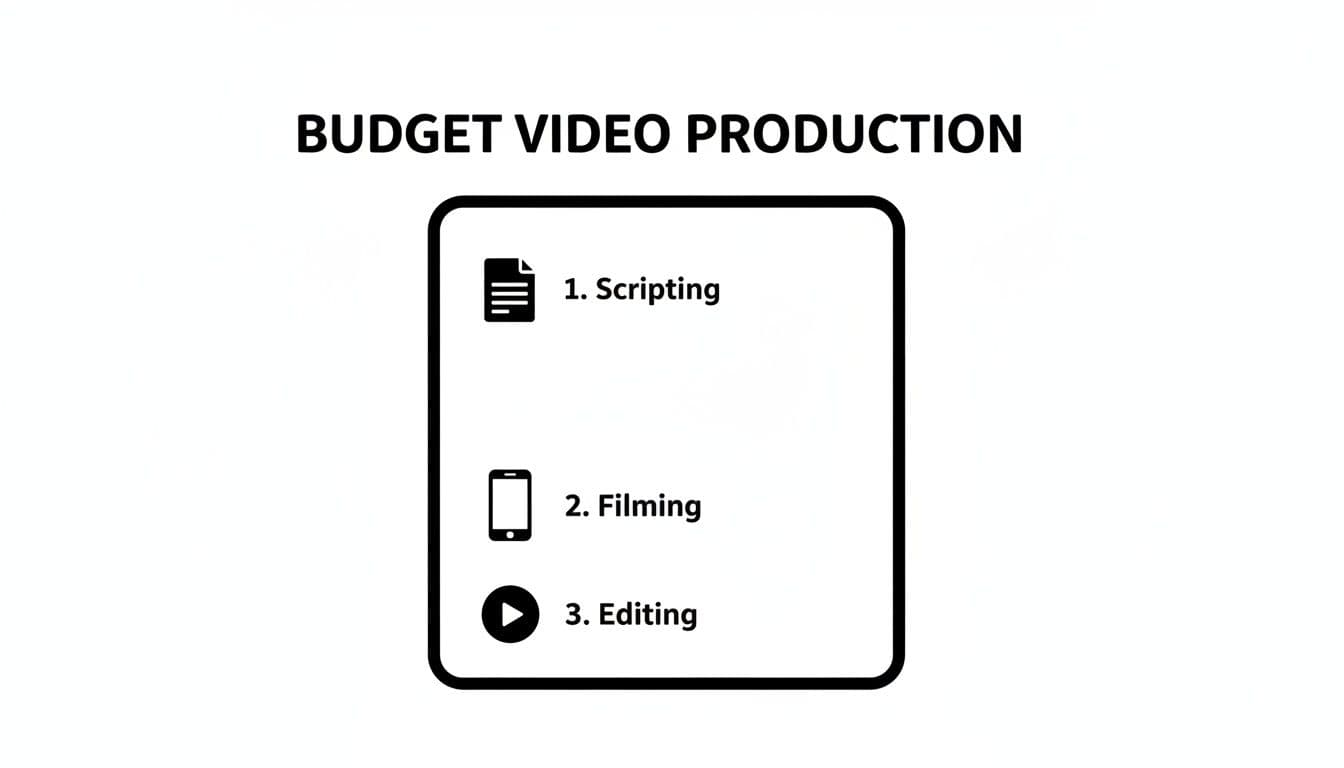
This isn’t about being rigid; it's about having a solid foundation—from idea to final cut—that ensures quality and consistency every time you hit record.
Optimize for Every Platform
Your first move is to adapt your video for the specific platforms where your customers hang out. This goes way beyond simple resizing. It’s about matching the content style and technical specs to what users on that platform expect to see.
To make this easier, here’s a quick-reference guide to the optimal video specs for the platforms that matter most to small businesses right now.
Video Specifications for Top Social Platforms
| Platform | Optimal Length | Aspect Ratio | Best For |
|---|---|---|---|
| Instagram Reels & TikTok | Under 60 seconds | 9:16 (Vertical) | Fast-paced, engaging hooks, trending audio, and behind-the-scenes content. |
| YouTube | 2-10+ minutes | 16:9 (Horizontal) | In-depth tutorials, detailed product demos, customer testimonials, and educational content. |
| Facebook Feed | 1-2 minutes | 1:1 (Square) | Quick tips, company updates, and short storytelling that works well on mobile feeds. |
| LinkedIn Feed | 1-3 minutes | 1:1 or 4:5 | Professional advice, industry insights, company culture showcases, and case studies. |
Paying attention to these details ensures your video feels native to the platform, which is a huge factor in how the algorithm will treat it and how users will respond.
Nail the Basics of YouTube SEO
Don’t just dump your video on YouTube and hope for the best. Treat it like a blog post by optimizing it for search. This is how you attract people who are actively looking for your solutions, turning a single video into a long-term lead-generation asset for your business.
Start by doing some light keyword research. You can use a free tool like Google's Keyword Planner, or just type phrases into the YouTube search bar and see what suggestions pop up. Once you have a target keyword, put it in these three key places:
- The Video Title: Make it clear and compelling. "How to Repot a Fiddle Leaf Fig for Beginners" is infinitely better than "Gardening Tips."
- The Description: Write a solid, 200+ word description that naturally incorporates your main keyword and a few related ones. Explain exactly what the video covers and what viewers will learn.
- The Tags: Add a mix of relevant tags, covering both broad topics (“indoor plants”) and specific phrases (“fiddle leaf fig care”).
This simple optimization routine can dramatically increase the chances of your video getting discovered for months, or even years, down the line.
Paid promotion isn't about spending a fortune. It's about precision. A small, targeted ad spend can deliver your video directly to the feeds of your ideal customers, turning views into tangible results.
Amplify Your Reach with a Little Paid Promotion
Finally, a small paid budget can be the ultimate amplifier. You don't need to spend thousands. Even $5-$10 per day on a platform like Facebook or Instagram can put your video directly in front of a highly targeted audience.
You can get incredibly specific, targeting users by their location, interests, age, and online behavior. If you want to go deeper on this, our complete walkthrough on how to create video ads has you covered. This strategic boost makes sure your best content reaches the people most likely to become your next customers.
Turning Video Analytics into Smarter Decisions
Once your video is out in the wild, the real work begins. This is the moment you shift from hoping your video works to building a reliable growth engine for your business. The secret isn’t just making more videos; it’s learning to listen to what your data is telling you.
Don't fall for the trap of vanity metrics. A video with 10,000 views that generates zero leads is a waste of time. I'd much rather have a video with 500 views that brings in 10 new customers. For a small business, every piece of content has to pull its weight, and analytics are how you keep score.
Focusing on Metrics That Matter
Instead of drowning in a sea of dashboards, just zero in on a few key performance indicators (KPIs) that connect directly to the goals you set earlier. These are the numbers that tell the real story of what’s working and what’s not.
Here are the essentials I always track:
- Watch Time and Audience Retention: This is, hands down, the most important metric. It tells you exactly how long people are sticking around. If you see a huge drop-off in the first 5-10 seconds, you know your hook isn't grabbing anyone's attention.
- Click-Through Rate (CTR): If your video asks people to do something—like "Visit our site" or "Download the guide"—the CTR shows you the percentage of viewers who actually followed through. A low CTR is a huge red flag that your call to action is either unclear, uninspired, or in the wrong spot.
- Conversion Rate: For most of us, this is the bottom line. It measures how many viewers completed the ultimate goal, whether that’s signing up for a newsletter, booking a call, or making a purchase. This is where video marketing truly proves its ROI.
Your goal isn't just to get people to start your video; it's to get them to finish it and take the next step. High audience retention is a powerful indicator that your message is resonating.
Creating Your Monthly Review Cadence
Data is useless if you don't do anything with it. Carve out some time every month to sit down with your analytics and look for patterns. This simple habit is what separates the businesses that get real results from video from those that just throw content at the wall.
During your review, ask these questions:
- Which videos had the highest watch time? Try to spot common threads. Was it the topic? The format? The length?
- Where are people dropping off? Pinpoint the exact moments viewers are bailing. Is a particular section dragging on too long? Did you get boring?
- Which CTAs are getting the most clicks? Don’t be afraid to experiment with different words, colors, and placements to see what moves the needle.
Let's say you run a small service business and notice your quick customer testimonial videos are driving a surprisingly high CTR to your "Book a Consultation" page. That’s not a coincidence; it's a clear signal from your audience that they value social proof. The next logical move? Double down and produce more customer stories. This data-driven approach takes all the guesswork out of your content strategy.
And this focus on conversion pays off. Websites that use video see an average conversion rate of 4.8%, a massive leap from the 2.9% for sites without video. As you dig into your numbers, remember that something as simple as a well-placed product demo can boost conversions by nearly 90%, turning your content into one of your best salespeople. You can dig deeper into how video impacts small business growth and find more stats to guide your strategy.
Your Questions on Video Marketing Answered
Jumping into video marketing can feel like you’re staring at a huge, complicated puzzle. It’s easy to get bogged down with questions before you even hit record. Let's tackle some of the most common hurdles I hear from small businesses, so you can get moving and start seeing results.
How Long Should My Marketing Videos Be?
This is the million-dollar question, but the answer isn't a single number. The perfect video length is all about context—where is it being watched, and what's your goal?
Here are some solid rules of thumb I stick to:
- Social Media Feeds (TikTok, Instagram Reels): You have seconds to earn that scroll-stop. Keep these videos under 60 seconds. Get to the good stuff immediately.
- Website Homepage (Explainer Video): Aim for the one-to-two-minute sweet spot. It’s just enough time to clearly explain what you do without losing a new visitor's attention.
- YouTube (Educational Content): Here, you can stretch your legs. Viewers come to YouTube to learn, so anything from two to ten minutes (or even longer) works well if the content is genuinely valuable.
The big takeaway? Match your video's length to the viewer's mindset on that specific platform.
What Type of Video Should a Small Business Make First?
My advice is always the same: start with an "About Us" or an explainer video for your homepage. Think of it as your digital handshake. It’s your first and best chance to tell visitors who you are, what problem you solve, and why you’re the one to solve it.
An explainer video is a workhorse. It clarifies your value proposition the second someone lands on your site, building an instant connection and making it easier for a curious visitor to become a paying customer.
This single video can become the foundation of your marketing, tirelessly greeting every potential client with a clear, compelling story.
Do I Really Need Expensive Gear to Start?
Absolutely not. In fact, obsessing over gear is one of the biggest mistakes you can make early on. The smartphone in your pocket shoots incredible, high-quality video that's perfect for online content.
If you're going to spend any money, put it into good audio.
A simple $20 lavalier microphone that clips onto your shirt will make your videos sound a hundred times more professional. Clear audio is non-negotiable; audiences will forgive shaky video, but they won't stick around for tinny, hard-to-hear sound. As for lighting? Just face a window. Natural light is free, and it looks fantastic.
How Often Should I Post New Videos?
Focus on consistency over frequency. Seriously. It's much better to publish one great, thoughtful video every week than it is to churn out five rushed, mediocre ones.
Start with a schedule you know you can maintain, even if it’s just once a week or twice a month. Get into a rhythm, see what your audience responds to, and then you can think about ramping things up. The goal is to build momentum and become a reliable voice they look forward to hearing from.
Ready to turn your photos into professional video ads in minutes? Proom AI gives you industry-specific templates and AI-powered tools to create stunning, share-ready videos effortlessly. Start your free trial and see how easy video production can be.
Ready to create video ads?
Turn your photos into scroll-stopping ads in minutes. No video editing skills required.
Try For Free