10 High-Converting Ad Copy Examples to Inspire You in 2026
Unlock the power of persuasion with these 10 high-converting ad copy examples. Get actionable templates and breakdowns for every platform and objective.
Staring at a blinking cursor, trying to summon words that convert? You're not alone. The difference between an ad that gets ignored and one that drives action often comes down to a few powerful lines of text. This guide isn't just a gallery of inspiration; it's a strategic breakdown of 10 proven ad copy examples across every major platform, from TikTok to LinkedIn.
We'll dissect what makes each one work: the psychology, the structure, and the specific tactics you can replicate. You'll learn how to craft compelling hooks, present irresistible offers, and write calls-to-action that audiences can't help but click. This comprehensive collection moves beyond simple descriptions to provide a deep analysis of high-performing campaigns.
Each example is chosen to illustrate a specific objective, whether it's building brand awareness on YouTube, driving B2B leads on LinkedIn, or securing e-commerce conversions through Google Shopping. We break down the core components of success, offering actionable takeaways you can apply immediately to your own campaigns. To further deconstruct effective strategies for compelling ad copy, explore these additional 7 Viral Ad Copy Examples that offer more perspectives on what captures audience attention.
Finally, we'll show you how to instantly bring these copy principles to life with powerful visuals using AI tools like Proom AI. You'll see how to turn static photos into dynamic video ads that stop the scroll and demand attention, amplifying the impact of your carefully crafted words. Let's get started.
1. Instagram Carousel Ad Copy - Engagement Objective
Instagram carousel ads are a powerful tool for engagement, allowing you to tell a story or showcase multiple products in a single post. The ad copy for these formats is unique; it must be concise and compelling enough to drive a specific action: the swipe. This approach focuses on building curiosity and momentum, guiding the user through each slide toward a final call to action.
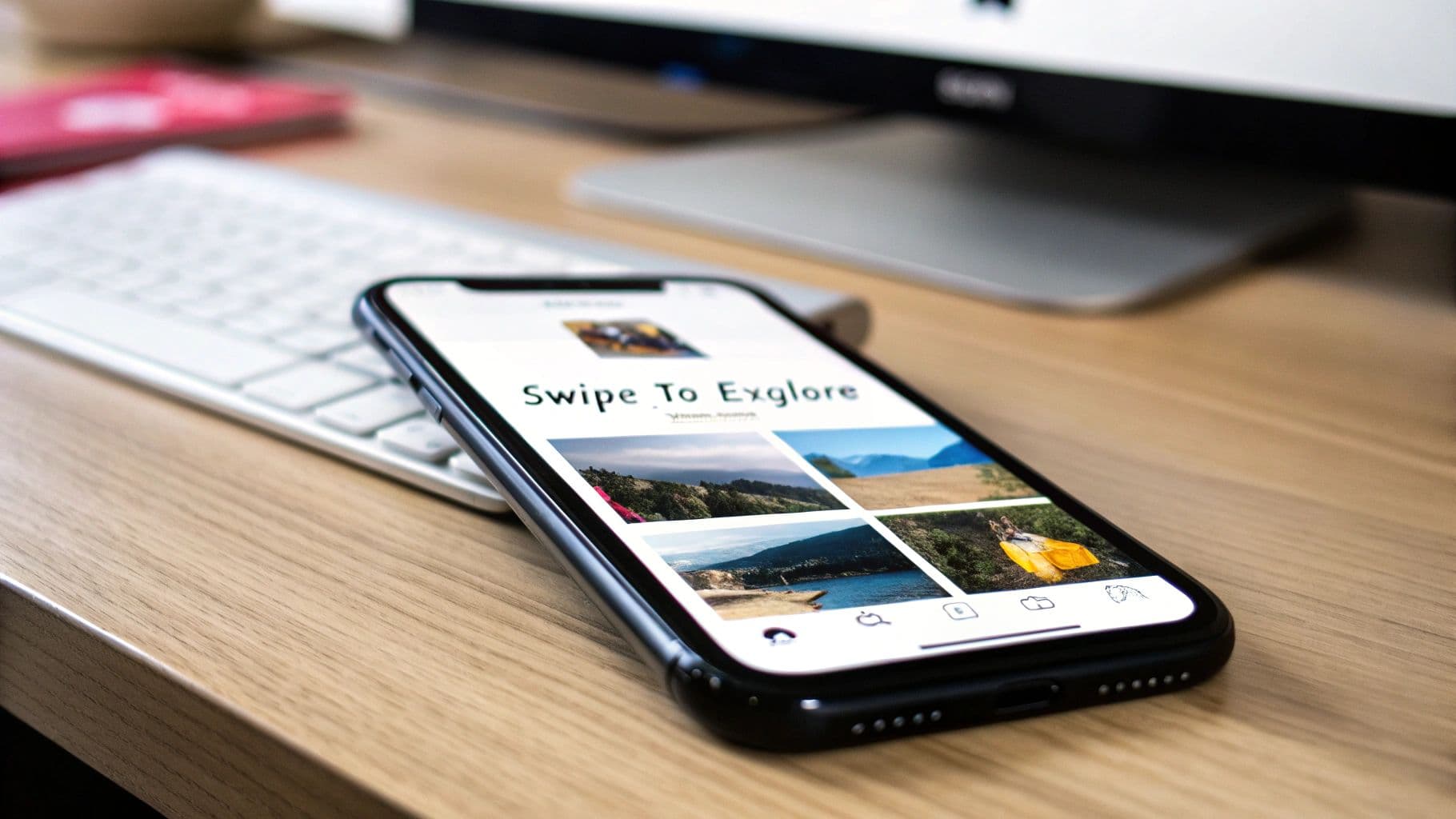
This type of ad copy excels because it leverages the platform's native behavior. Users are already accustomed to swiping, and the copy simply provides the motivation. Brands like Wayfair and Article use this to display room transformations, while fashion giants like ASOS showcase different ways to style an outfit. The goal isn't just to show more, it's to create an interactive micro-story.
Why It Works & Core Strategy
The strategy behind effective carousel ad copy examples is rooted in a psychological principle known as the "curiosity gap." By presenting an incomplete picture or promising a satisfying reveal, the copy creates an intellectual need to see what comes next.
- Builds Narrative Tension: Each swipe is a step forward in a story. Copy like "From forgotten space..." on slide one and "...to dream oasis" on slide three creates a compelling narrative.
- Encourages Micro-Commitments: A swipe is a small, low-effort action. Getting users to perform this action multiple times increases their investment in the ad, making them more likely to click the final CTA.
- Maximizes Ad Real Estate: Instead of one static image, you can present multiple angles, use cases, or benefits, all held together by a thread of persuasive copy.
Actionable Tips & A/B Testing Ideas
To implement this, focus on clarity and momentum. Use short, action-oriented phrases and visual cues like arrows (→) or pointing emojis (👉).
- Lead with an Emotional Hook: Start with a question or a bold statement that piques interest.
- A/B Test Idea: Test a problem-focused hook ("Tired of your bland living room?") against an aspirational one ("Your dream living room is one swipe away.").
- Keep Slide Copy Minimal: Aim for 30 characters or less per slide to ensure readability on mobile devices. Let the visuals do most of the talking.
- Save Your CTA for Last: Place your strongest offer or call to action on the final slide after you've built maximum interest.
- Proom AI Application: Use Proom AI to batch-generate dynamic video clips from your product or before-and-after photos. Test a carousel of 3 static images against a Proom-generated sequence of 3 short video clips to see which drives more swipe-throughs and engagement.
2. TikTok Native Video Ad Copy - Conversion Objective
TikTok native video ads are designed to blend seamlessly into the "For You Page" (FYP), mirroring the style of organic, user-generated content. For a conversion objective, the copy must hook the viewer in the first two seconds, present a clear problem-solution arc, and drive a specific action. This format is all about speed, authenticity, and delivering value quickly to capture attention and direct it toward a purchase or sign-up.
This type of ad copy excels by leveraging the platform's culture of rapid-fire content consumption. The copy isn't just the caption; it's the on-screen text, the spoken script, and the trending sound choice all working together. Brands like E.l.f. Cosmetics use this for dramatic before-and-after transformations, while SaaS companies demonstrate a key feature that saves users time. The goal is to feel less like an ad and more like a valuable discovery.
Why It Works & Core Strategy
The strategy for high-converting TikTok ad copy examples is built on the principle of "pattern interruption." The FYP is a fast-scrolling environment, and your ad must immediately break the user's hypnotic swiping pattern with a compelling hook, either visually or through text.
- Grabs Immediate Attention: The first 2-3 seconds are everything. A hook like "POV: You found the product that solves your [problem]" or "Stop scrolling if you..." forces the user to pause and engage.
- Leverages Platform Authenticity: The copy feels native, using popular formats, on-screen text, and trending sounds. This lowers the viewer's "ad guard" and makes them more receptive to the message.
- Delivers Value Upfront: Instead of a slow build-up, the ad immediately presents a benefit ("Save 5 hours per week with this tool") and then uses the remaining time to prove it, building trust for the conversion.
Actionable Tips & A/B Testing Ideas
To implement this, think like a creator, not an advertiser. Your copy should be direct, use on-screen text for clarity, and lean into trending formats.
- Start with a Strong Pattern Interrupt: Use a bold claim, a surprising visual, or a direct question to stop the scroll.
- A/B Test Idea: Test a problem-focused hook ("This before/after took 30 minutes") against a benefit-driven one ("Get flawless skin in 30 minutes").
- Use On-Screen Text Strategically: Add text overlays that highlight the key benefit. Many users watch with sound off, so this is crucial for communicating your message.
- Integrate a Clear, Native CTA: Your call to action should feel natural. Instead of "Buy Now," try "Link in bio to get yours" or "Find it at the orange shopping cart."
- Proom AI Application: Use Proom AI to generate multiple video ad variations from a single product photo set. Test a version with a question-based text hook against another with a bold statement hook to see which drives a lower cost-per-click. To learn more about this process, explore how to create video ads that convert.
3. LinkedIn Text-Based Ad Copy - B2B Lead Generation
LinkedIn ad copy is tailored for a professional audience, prioritizing value, data, and tangible business outcomes over creative flair. This direct, no-nonsense approach is designed for B2B lead generation, where the goal is to capture the attention of busy decision-makers scrolling through their feed. The copy must immediately communicate relevance and a strong return on investment.
This type of ad copy excels because it aligns with the user's mindset on the platform. Professionals on LinkedIn are looking for career growth, industry insights, and solutions to business challenges. Brands like Salesforce and HubSpot master this by leading with quantifiable results (e.g., "Reduce campaign setup time from weeks to minutes") that speak directly to a target persona's pain points, making the ad feel less like a promotion and more like a valuable business solution.
Why It Works & Core Strategy
The strategy behind high-performing LinkedIn ad copy examples is rooted in authority and specificity. Vague promises are ignored; concrete, data-backed claims command attention and build immediate credibility with a discerning audience.
- Targets Specific Pain Points: The copy identifies a common professional frustration and presents a clear, efficient solution. It speaks the language of the target role, whether it's a Marketing Director or a Real Estate Team Lead.
- Leads with Quantifiable Value: Starting with a specific metric (e.g., "Cut your production time by 80%") acts as a powerful hook. It instantly answers the crucial "What's in it for me?" question from a business perspective.
- Builds Professional Credibility: Using industry-specific terminology and focusing on ROI positions the advertiser as an expert. This is critical for earning the trust required to generate a high-quality lead.
Actionable Tips & A/B Testing Ideas
To implement this, be direct and data-driven. Your copy should be concise, scannable, and focused entirely on the business benefit. For additional inspiration on crafting compelling messages for professional networking, explore these effective LinkedIn Post Examples.
- Address Your Target Audience Directly: Start your ad by calling out the specific job title you're targeting.
- A/B Test Idea: Test a broad hook ("For marketing teams...") against a hyper-specific one ("For Marketing Directors at SaaS startups...").
- Keep It Under 150 Words: LinkedIn's algorithm often favors shorter text posts in the feed. Get to the point quickly before the "see more" link.
- Use Power Words for B2B: Incorporate terms like 'Accelerate,' 'Proven,' 'Transform,' and 'Optimize' to convey authority and results.
- Proom AI Application: Use Proom AI to transform static case study infographics or client testimonials into a professional video. Test a text-only ad against a version featuring a Proom-generated video that visually reinforces your key metrics and success stories.
4. Google Shopping Ad Copy - E-commerce Product Objective
Google Shopping ads are a high-intent format where the "copy" is less about prose and more about structured data. The ad is primarily visual, driven by the product image, title, price, and retailer name. The goal is to present the most critical purchase information upfront, capturing users who are actively searching for a specific product and are ready to buy.
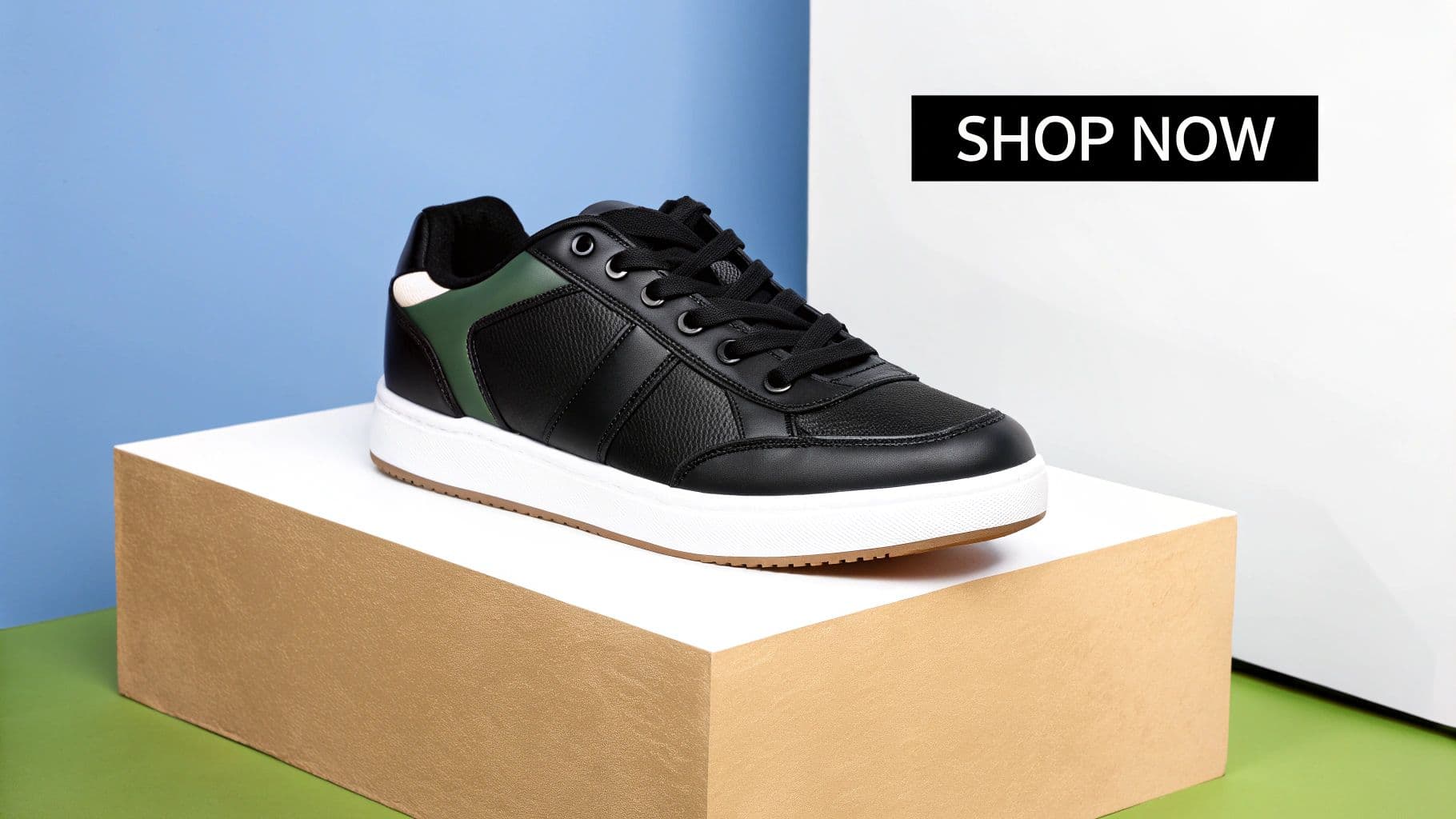
This ad format thrives on precision and relevance. Unlike social media ads that interrupt a user's feed, Shopping ads meet the user exactly when they are looking for a solution. Success here is determined by the quality of the product feed, not clever taglines. Retailers like Wayfair and fashion brands on Shopify excel by optimizing their product titles and ensuring their images are professional and compelling.
Why It Works & Core Strategy
The strategy for these ad copy examples revolves around removing friction from the buying process. By presenting key data points immediately, these ads allow users to self-qualify and click through with a high likelihood of converting. It’s an exercise in clarity and data optimization.
- Matches High Commercial Intent: The copy (data) directly answers the user’s search query, showing them exactly what they asked for.
- Reduces Information Overload: Users can compare price, brand, and appearance at a glance without clicking on multiple links, making the decision process faster.
- Builds Trust Through Transparency: Displaying the price and seller name upfront builds immediate trust and filters out users who are not a good fit for the offer.
Actionable Tips & A/B Testing Ideas
To succeed, focus on optimizing your product feed and ensuring your visuals are top-notch. The copy is the data, so make sure it's accurate and descriptive.
- Optimize Product Titles for Search: Front-load your titles with the most important keywords like brand, product type, color, and size.
- A/B Test Idea: Test a title format like "Brand - Product Name - Color" against "Product Name - Key Feature - Brand" to see which generates a higher click-through rate.
- Use High-Quality, Clean Images: Ensure your main product image has a clean, preferably white, background to stand out.
- Keep Data Accurate: Regularly sync your product feed to ensure price, availability, and shipping information are always correct to avoid ad disapprovals and user frustration.
- Proom AI Application: While Shopping ads require static images, you can enhance the destination. Use Proom AI to generate a lifestyle or usage video from your product photos and feature it prominently on the corresponding landing page to increase conversion rates after the click.
5. Facebook Dynamic Product Ad Copy - Retargeting
Facebook Dynamic Product Ads are a retargeting powerhouse, automatically showing personalized ads to users who have already interacted with your site. The ad copy is dynamically generated using your product catalog, pulling in details like product names and prices to address users who viewed an item or added it to their cart but didn't complete the purchase. This hyper-personalized approach reminds users of their interest and provides a gentle nudge back toward conversion.
This type of ad copy excels because it taps into existing user intent with surgical precision. Instead of a generic message, the user sees the exact product they considered, making the ad feel less like an interruption and more like a helpful reminder. Brands like Shein and Wayfair use this to combat cart abandonment with copy like, "Still thinking it over? Your [Product Name] is waiting for you."
Why It Works & Core Strategy
The strategy behind dynamic ad copy examples is built on the psychological principle of familiarity and timeliness. By re-engaging a warm audience with a specific, relevant message, you capitalize on their pre-existing interest before it fades.
- Leverages Behavioral Data: The copy is tailored based on specific actions (e.g., "viewed content" vs. "added to cart"), allowing for highly relevant messaging.
- Creates Urgency: Dynamic fields can be combined with urgency triggers. A message like, "Limited stock left for your [Product Name]!" is far more compelling than a general sale announcement.
- Automates Personalization at Scale: You can retarget thousands of users with unique ads for every product in your catalog without manually creating each one.
Ready to create video ads?
Turn your photos into scroll-stopping ads in minutes. No video editing skills required.
Try For FreeActionable Tips & A/B Testing Ideas
To implement this, focus your copy on overcoming the final purchase hesitation. Use dynamic placeholders from your product catalog (like {{product.name}}) to personalize the message.
- Segment Your Copy: Create different copy variations for distinct audiences.
- A/B Test Idea: Test a discount-focused message ("Get 15% off the [Product Name] in your cart") against a social proof message ("Join 5,000 others who love their [Product Name]").
- Incorporate Urgency and Scarcity: Use phrases like "Your cart expires soon" or "Low in stock" to prompt immediate action.
- Reference Product Features: Pull specific attributes from your catalog to remind users why they were interested. For example: "Complete your look with the [product.name] in [product.color]."
- Proom AI Application: Enhance your product feed by using Proom AI to automatically generate short demo videos for each item. You can then dynamically serve these engaging video ads to users who previously viewed a static product image. By crafting your AI-powered Facebook ads with this method, you can powerfully recapture user attention.
6. YouTube Bumper Ad Copy - Brand Awareness
YouTube bumper ads are the sprinters of video advertising. These unskippable, 6-second clips are designed for one primary goal: rapid brand recall. The ad copy is often minimal or even non-existent, replaced by powerful visuals and a single, memorable message. The format forces advertisers to distill their brand story or product benefit into its most potent, impactful form, making it a high-frequency tool for staying top-of-mind.
This type of ad excels because it interrupts the user experience for only a moment, delivering a brand impression before frustration can set in. Brands like Nike and Apple use this format to reinforce emotional connections or tease upcoming products with quick, cinematic cuts. For e-commerce and real estate, it’s perfect for a fast-paced montage of a room transformation, ending with a strong logo reveal. The goal is not to drive immediate clicks but to build familiarity and recall.
Why It Works & Core Strategy
The strategy behind effective bumper ad copy examples is built on the psychological principle of "mere-exposure." Repeated, brief encounters with a brand create a sense of familiarity and trust over time. With only six seconds, there's no room for a complex narrative; the focus must be on a single, clear idea.
- Maximizes Impact, Minimizes Intrusion: The 6-second, unskippable format guarantees a complete view without annoying the user, making the message more likely to be absorbed.
- Focuses on a Single Message: Whether it's a brand promise ("Transform your space in seconds") or a product benefit, the ad has one job to do, ensuring the message is not diluted.
- Strong Visual Storytelling: With minimal copy, the visuals must do the heavy lifting. Rapid cuts, surprising transformations, or emotionally resonant imagery capture attention instantly.
Actionable Tips & A/B Testing Ideas
To implement this, think "punchline first." Your hook must land in the first one or two seconds. Strong audio and a prominent logo are non-negotiable.
- Hook Immediately: Start with dynamic movement or an emotional shot. A rapid before-and-after sequence is perfect for this.
- A/B Test Idea: Test an opening frame that shows the "problem" (a cluttered room) against one that shows the "aspiration" (a beautiful design element) to see which captures attention faster.
- One Core Message Only: Decide if you're communicating your brand value, a problem-solution, or a specific benefit, and stick to it.
- End with Your Brand: The final 2-3 seconds should be dedicated to a clear, bold display of your logo and brand name to cement recall.
- Proom AI Application: Use Proom AI to generate a fast-paced video montage from a sequence of before-and-after photos. Test a version with upbeat music against one with a concise voiceover to determine which performs better for brand recall.
7. Email Subject Line & Preview Copy - Nurture & Conversion
Email subject lines and their accompanying preview text are the first, and often only, chance an ad has to make an impression in a crowded inbox. This micro-copy is designed to achieve one primary goal: get the open. For nurture and conversion objectives, this copy must be concise, personalized, and compelling enough to stand out and drive a click, acting as the gateway to the email's core message.
This type of ad copy excels because it operates in a high-stakes, limited-space environment. A great subject line sparks curiosity or clearly communicates value, while the preview text provides crucial context to seal the deal. Brands like HubSpot and Mailchimp have built entire playbooks around optimizing these few characters to guide subscribers from awareness to action, proving that the smallest words can have the biggest impact.
Why It Works & Core Strategy
The strategy for high-performing subject line ad copy examples centers on relevance and intrigue. Unlike a social feed, the inbox is a personal space. The copy must respect that by being valuable and tailored, avoiding generic spam triggers that lead to immediate deletion.
- Creates a Personal Connection: Personalization, like using the recipient's name or referencing past behavior, makes the email feel like a one-to-one conversation rather than a mass broadcast.
- Leverages a "Teaser" Effect: Good subject and preview copy acts like a movie trailer. It hints at valuable content inside, like a video walkthrough or a portfolio reveal, without giving everything away.
- Optimized for Mobile-First Reading: With over half of all emails opened on mobile, brevity is key. The copy is designed for quick scanning, ensuring the core message is understood instantly.
Actionable Tips & A/B Testing Ideas
To implement this, treat the subject line and preview text as a single, powerful unit. They should complement each other to tell a micro-story that encourages an open.
- A/B Test Subject Line Angles: Test different psychological triggers to see what resonates with your audience.
- A/B Test Idea: Test a curiosity-driven subject line ("[Name], your portfolio could look like THIS →") against a benefit-driven one ("3 client-winning portfolio tips inside").
- Use Preview Text Strategically: Don't let the preview text simply repeat the subject. Use it to add context, pose a question, or introduce the primary call to action.
- Keep It Under 50 Characters: Aim for subject lines under 50 characters to prevent them from being cut off on mobile devices. Use emojis sparingly for visual pop.
- Proom AI Application: Create a short, dynamic video of a project transformation or product feature using Proom AI. Embed it in your email and use a subject line like "Before & after: See what your space could become" to dramatically increase click-through rates to the video content.
8. Pinterest Pin Description & Hashtag Copy - Discovery & Traffic
Pinterest operates more like a visual search engine than a traditional social media platform, making its ad copy a unique blend of SEO and inspiration. Effective pin descriptions are crafted to capture users in the discovery and planning stages of their buying journey. The copy must be both keyword-rich for the algorithm and benefit-driven for the human user, aiming to drive traffic and spark ideas.
This approach is successful because it aligns perfectly with user intent. People come to Pinterest to find solutions and inspiration, whether for a kitchen remodel or a new outfit. Brands like Wayfair, Etsy sellers, and thousands of lifestyle bloggers use this strategy to become the answer to a user's visual search, driving highly qualified traffic to their sites.
Why It Works & Core Strategy
The strategy for powerful Pinterest ad copy examples hinges on discoverability. Unlike feed-based ads that interrupt, Pinterest copy assists. The goal is to appear organically in a user's search for "modern living room ideas" or "spring capsule wardrobe" by embedding relevant keywords within an inspiring description.
- Targets High-Intent Users: The copy intercepts users who are actively looking for ideas and solutions, making them more receptive to clicking through.
- Leverages Visual SEO: Pinterest's algorithm indexes the text in your pin description. A well-optimized description dramatically increases your content's visibility and lifespan.
- Blends Inspiration with Keywords: The copy uses aspirational language like "Stunning kitchen renovation" while weaving in specific, searchable terms like "white subway tile" and "custom cabinetry."
Actionable Tips & A/B Testing Ideas
To implement this, think like a search engine optimizer and a storyteller simultaneously. Your copy should be functional and enticing.
- Lead with a Benefit-Driven Hook: Start your description with a powerful outcome. Instead of "Photo of a kitchen," try "Transform your kitchen with these renovation ideas."
- A/B Test Idea: Test a direct, keyword-focused description ("Kitchen remodel inspiration: white subway tile, custom cabinetry") against a more narrative one ("See how we turned a dated kitchen into a modern dream space.").
- Integrate Long-Tail Keywords: Use Pinterest's search bar autocomplete to find what users are searching for. Weave phrases like "small space design ideas" or "minimalist style outfits" naturally into your sentences.
- Use Video Pins for Engagement: Video pins get significantly higher engagement. Use Proom AI to create a short, dynamic video from before-and-after photos of a project. Test this video pin against a static image pin with the same copy to measure traffic and save rates.
- Include Relevant Hashtags: Add 3-5 broad and niche hashtags at the end of your description to categorize your content and expand its reach.
9. Instagram Stories Ad Copy - Swipe-Up Conversions
Instagram Stories ads capitalize on the platform's immersive, full-screen format to drive immediate action. The ad copy here is often minimal and overlaid on video or image content, designed to complement the visual narrative and funnel users toward a direct conversion action, historically the "swipe-up" and now the link sticker. This format thrives on urgency and clarity, interrupting a user's content consumption with a compelling, time-sensitive offer.
This type of ad copy is powerful because it meets users where their attention is most engaged: in the vertical, ephemeral Stories feed. Brands in fast-moving industries like fashion (e.g., Fashion Nova) and e-commerce use it for flash sales, while service-based businesses like design firms or real estate agents leverage it to offer virtual tours or consultations. The goal is to move a user from passive viewing to active engagement on an external site in a single, fluid motion.
Why It Works & Core Strategy
The strategy behind high-converting Stories ad copy examples is rooted in the principle of "low-friction conversion." The path from discovery to action is incredibly short. The copy's job is to provide just enough motivation to prompt that single, decisive gesture.
- Leverages Platform Behavior: Users are conditioned to tap and swipe quickly through Stories. A direct CTA like "Swipe Up to Shop" aligns perfectly with this existing behavior.
- Creates Urgency: The ephemeral nature of Stories makes them the ideal placement for time-sensitive offers. Copy like "Today only" or "Ends at midnight" feels native to the format.
- Minimizes Cognitive Load: With only a few seconds to capture attention, the copy is direct and benefit-oriented. It answers the "what's in it for me?" question instantly, without requiring deep thought.
Actionable Tips & A/B Testing Ideas
To implement this, focus your copy on the first two seconds of the ad. Use bold, clear text that contrasts with the background, and always include captions for sound-off viewers.
- Lead with the Outcome: Start with the end benefit to hook the viewer immediately.
- A/B Test Idea: Test a direct offer ("50% Off Flash Sale - Swipe Up") against a curiosity-driven hook ("Our #1 Bestseller is Back - Swipe Up").
- Use Visual CTA Cues: Combine your text CTA with native Instagram stickers, GIFs, or animated arrows pointing to the link area to maximize visibility.
- Keep Copy Above the Fold: Ensure your key message and CTA are placed in the safe zone of the screen, avoiding the very top and bottom where the UI can obscure them.
- Proom AI Application: Use Proom AI to transform static portrait-mode product photos into dynamic 9:16 vertical videos. Test a static image ad with overlaid text against a Proom-generated video ad with the same copy to see which achieves a lower cost-per-swipe and higher click-through rate.
10. Google Search Ad Copy - High-Intent Keyword Targeting
Google Search ads are the epitome of direct-response marketing. These text-only ads appear at the top of search results, targeting users who are actively looking for a specific solution, product, or service. The ad copy here is less about storytelling and more about precision; it must directly answer the user's query, match their intent, and provide a compelling reason to click right now.
This type of ad copy thrives because it meets customers exactly where they are in their buying journey. When someone searches "AI-powered ad video templates," they aren't browsing; they are problem-solving. Companies like HubSpot and Asana use this to capture high-intent leads, while local businesses use it to drive immediate calls and foot traffic. The goal is to be the most relevant, efficient solution to a user's stated problem.
Why It Works & Core Strategy
The strategy for effective search ad copy examples is built on relevance and speed. Google's algorithm rewards ads that closely match the searcher's keyword, which improves Quality Score, lowers cost-per-click (CPC), and increases ad visibility. It's a direct conversation with a motivated user.
- Matches User Intent: The copy directly reflects the search term, reassuring the user that they have found the right solution. An ad headline like "Turn Photos to Cinematic Reels" perfectly matches a search for "make videos from pictures."
- Delivers Instant Value Proposition: Within seconds, the user knows the core benefits. Headlines and descriptions quickly communicate what the product does ("AI-Generated"), for whom ("Marketing Agencies"), and why it's better ("Social-Ready in Minutes").
- Leverages Specificity and Numbers: Vague claims are ignored. Specifics like "Create Videos in Under 3 Minutes" or "Trusted by 50,000+ Brands" build immediate credibility and set clear expectations.
Actionable Tips & A/B Testing Ideas
To implement this, focus on mirroring the keyword in your headline and packing your descriptions with benefits and social proof. Every character counts.
- Lead with Keyword Relevance: Ensure your first headline contains the primary keyword. This has the single biggest impact on click-through rate (CTR).
- A/B Test Idea: Test a question-based headline ("Need Ad Videos Fast?") against a direct solution-based headline ("Fast Ad Video Creation").
- Use Power Words and Numbers: Incorporate words like "Instant," "Free," "Proven," and "Guaranteed." Add specific numbers to quantify benefits ("Increase Engagement by 40%").
- Structure Headlines Strategically: Use a formula: Headline 1 = Keyword/Solution, Headline 2 = Key Benefit/Feature, Headline 3 = CTA/Social Proof.
- Proom AI Application: Use Proom AI to create a gallery of high-quality portfolio videos. Link your search ad to a dedicated landing page featuring this gallery, and A/B test a headline that mentions "See AI-Generated Examples" against a more generic "Learn More" call to action.
10-Point Ad Copy Comparison
| Item | Implementation Complexity | Resource Requirements | Expected Outcomes | Ideal Use Cases | Key Advantages |
|---|---|---|---|---|---|
| Instagram Carousel Ad Copy - Engagement Objective | Medium — multiple slide sequencing & design | Several images/videos, slide design, concise copy | Higher engagement, increased time-on-ad & swipe-throughs | Before/after transformations, product collections, storytelling | Strong storytelling, showcases variety, higher engagement than single images |
| TikTok Native Video Ad Copy - Conversion Objective | High — trend research, fast edits, hook testing | Short-form video production, trending audio, iterative testing | High organic reach potential and conversion lift for young demos | Product demos, viral conversion campaigns, attention-grabbing offers | Native viral potential, blends with UGC, can lower CPA for young audiences |
| LinkedIn Text-Based Ad Copy - B2B Lead Generation | Low–Medium — targeted professional messaging | Professional assets, case studies, precise targeting | High-quality leads, stronger intent but higher CPC | B2B lead gen, thought leadership, enterprise services | Access to decision-makers, strong ROI for B2B, credibility-focused |
| Google Shopping Ad Copy - E-commerce Product Objective | Medium — requires structured feed & optimization | Product feed, high-quality images, accurate pricing | Direct product page traffic and conversions from high-intent buyers | Retail product sales, price-competitive listings | Visual-first, strong CTR, easy ROAS measurement |
| Facebook Dynamic Product Ad Copy - Retargeting | High — pixel, catalog & dynamic templates setup | Product catalog, tracking pixel, dynamic creatives | Highest conversion rates for cart recovery and retargeting | Cart abandonment, product retargeting, personalized offers | Scalable personalization, automation reduces manual work, strong CVR |
| YouTube Bumper Ad Copy - Brand Awareness | Medium — strict 6s creative discipline | Short edited video, strong visuals and audio branding | High recall and frequency; low direct conversions alone | Broad brand campaigns, awareness bursts, complementing longer ads | High completion rates, low CPM, memorable single-message delivery |
| Email Subject Line & Preview Copy - Nurture & Conversion | Low — headline and preview optimization | Segmented lists, creative content, tracking tools | High ROI, improved open and click rates when targeted | Nurture sequences, promotion of portfolio videos, re-engagement | Direct audience relationship, highly testable, drives qualified traffic |
| Pinterest Pin Description & Hashtag Copy - Discovery & Traffic | Medium — keyword research and SEO optimization | Optimized images/videos, keyword research, varied descriptions | Long-term discovery traffic and sustained referral growth | Inspiration-stage content, DIY/design, evergreen visual content | Long pin lifespan, strong discovery intent, great for visual niches |
| Instagram Stories Ad Copy - Swipe-Up Conversions | Medium — vertical formatting & rapid messaging | Vertical video (9:16), captions, clear swipe CTA | Immediate clicks and mobile conversions from interrupt format | Time-sensitive offers, direct-response campaigns, landing traffic | High engagement, direct link behavior, optimized for mobile immediacy |
| Google Search Ad Copy - High-Intent Keyword Targeting | Medium — focused keyword & headline work | Keyword data, high-quality landing pages, tracking | High conversion rates from users with purchase intent | Service queries, transactional searches, local intent capture | Reaches high commercial intent, measurable, strong CTR with extensions |
Your Turn: Transform These Examples into Action
We've journeyed through a comprehensive gallery of high-performing ad copy examples, from the fast-paced world of TikTok to the professional corridors of LinkedIn. We’ve dissected what makes them tick: the psychological triggers, the platform-specific nuances, and the strategic formulas that turn passive scrollers into active customers. The goal was never just to show you what works, but to hand you the blueprint so you can build it yourself.
The core lesson is clear: exceptional ad copy is not a product of random genius. It's an engineered outcome, built by methodically combining a deep understanding of your audience's pain points with proven communication frameworks. It's about knowing when to lead with a startling statistic on YouTube versus a relatable story on Instagram.
Recapping Your Ad Copy Toolkit
As you step away from these examples and toward your own ad campaigns, keep these foundational principles at the forefront of your creative process. They are the strategic threads that connect every successful ad we analyzed.
- Clarity Over Cleverness: Your primary goal is to be understood instantly. A clever pun is worthless if it obscures the value proposition. Always prioritize a message that is direct, simple, and immediately communicates "what's in it for me?" to the audience.
- Platform-Native Language: Effective ads don't feel like ads. They blend seamlessly into the user's feed. This means adopting the tone, pacing, and format that feel native to each platform, whether it’s the authentic, user-generated feel of TikTok or the polished, data-driven authority of LinkedIn.
- The Power of Specificity: Vague promises like "high-quality" or "best service" are invisible. Tangible, specific details like "made from 100% organic Turkish cotton" or "reduces project time by 30%" are what build trust and create a vivid picture in the customer's mind.
- A Single, Focused CTA: Every ad must have one clear job to do. Don't confuse your audience by asking them to "Learn More," "Shop Now," and "Follow Us." Choose the single most important action you want them to take and make that call-to-action impossible to ignore.
Your Action Plan for Better Ad Copy
Inspiration without action is just entertainment. To truly capitalize on the insights from these ad copy examples, you need a plan. Here are your immediate next steps to translate these lessons into measurable results.
- Identify Your Core Objective: Before you write a single word, define your primary goal. Is it driving immediate e-commerce sales (conversion), generating qualified B2B leads (consideration), or simply getting your brand name in front of a new audience (awareness)? Your objective dictates the entire creative direction.
- Select Your Framework: Choose one of the ad copy formulas or structures we've discussed that aligns with your objective. Start with a classic like PAS (Problem-Agitate-Solution) for a conversion-focused ad or AIDA (Attention-Interest-Desire-Action) for a broader awareness campaign.
- Draft and Adapt: Write your first version based on the framework. Now, go back through the relevant examples in this article. How can you inject more specificity? Can you rephrase the hook to be more emotionally resonant? How can you make the CTA more urgent and compelling?
- Iterate and Test Relentlessly: Your first draft is never your final version. The true magic happens in the testing process. Create two or three variations of your headline, your primary text, and your CTA. Even a small change, like swapping "Get Yours" for "Claim Your Discount," can lead to significant performance lifts. This is where you separate good marketers from great ones.
Mastering the art and science of ad copy is a force multiplier for your entire marketing strategy. It elevates your creative, improves your click-through rates, lowers your acquisition costs, and ultimately, transforms your advertising budget from an expense into a powerful growth engine. The examples are your guide, but the next breakout campaign is waiting for you to write it.
Ready to pair your powerful new ad copy with stunning video creative in minutes? Proom AI transforms your static product photos into dynamic, engaging video ads, allowing you to A/B test your best copy variations with fresh visuals at lightning speed. Stop letting creative bottlenecks slow you down and start converting with Proom AI today.
Ready to create video ads?
Turn your photos into scroll-stopping ads in minutes. No video editing skills required.
Try For Free